
Disclosure: This post contains affiliate links. If you click through and make a purchase, we may earn a small commission at no extra cost to you. Thank you for supporting this site!
You’ve seen it on your Fitbit display dozens of times: a “Sleep Score” sitting in the 60–90 range, a breakdown of light, deep, and REM sleep, and a confident statement about your total sleep duration. But if you’ve ever wondered whether that number actually reflects what’s happening in your brain when you close your eyes—whether Fitbit’s tracking is genuinely measuring sleep stages or just making educated guesses—you’re asking the right question. The gap between what a wearable claims to measure and what sleep scientists have actually validated in peer-reviewed studies is where the real story lives. Fitbit, owned by Google and one of the market’s longest-running sleep trackers, markets itself on accuracy. It uses accelerometers to detect movement patterns and proprietary algorithms to sort sleep into stages. But those algorithms have never been tested in a head-to-head comparison against polysomnography (PSG)—the gold-standard clinical sleep test that measures brain waves, eye movement, and muscle activity. What has been studied? A 2022 validation paper in Journal of Clinical Sleep Medicine found that Fitbit devices correctly identified sleep versus wake time with roughly 85% accuracy. But sleep stages—the thing people most want to know about—that’s where things get murky. This article cuts through the marketing to show you exactly what Fitbit’s tracking can and cannot tell you, what the science actually says, and whether that Sleep Score means what you think it means.
18 min read
In This Article
- What Is Fitbit’s Sleep Score, and How Does It Get Calculated?
- The Fitbit Validation Studies: What Science Actually Says About Accuracy
- Sleep Score Reliability: Is It Actually Meaningful?
- Deep Sleep and REM Sleep: Where Fitbit’s Accuracy Hits a Wall
- Fitbit vs. Other Sleep Trackers: How It Stacks Up
- What Fitbit Tracks Better Than You’d Think: Bedtime, Wake Time, and Total Sleep Duration
- The Sleep Score Formula: Why 60 Might Be Better Than You Think (and Why 90 Might Not Be)
- Limitations and What Fitbit Doesn’t (and Can’t) Track
- How to Use Fitbit Sleep Data Responsibly
- Fitbit Sleep Score vs. Clinical Sleep Medicine: When to Upgrade Your Expectations
- Alternatives to Fitbit: When You Might Want Something Different
- Frequently Asked Questions
- Verdict: Is Fitbit Sleep Tracking Worth Trusting?
Key Takeaways
- What Is Fitbit’s Sleep Score, and How Does It Get Calculated?
- The Fitbit Validation Studies: What Science Actually Says About Accuracy
- Sleep Score Reliability: Is It Actually Meaningful?
- Deep Sleep and REM Sleep: Where Fitbit’s Accuracy Hits a Wall
What Is Fitbit’s Sleep Score, and How Does It Get Calculated?
Fitbit’s Sleep Score is a composite metric introduced in 2020 that attempts to grade your overall sleep quality on a scale of 0–100. It’s not a clinical diagnosis; it’s a proprietary algorithm designed to give you a single number to trend over time. The score pulls from five components: total sleep duration (which should be at least 7–8 hours for a good score), sleep duration consistency (going to bed and waking at similar times), time spent awake after sleep onset (the earlier you fall asleep and the less you wake, the better), and REM and deep sleep percentages (Fitbit targets 15–20% deep and 20–25% REM as “good”).
Fitbit calculates these stages using a single accelerometer—a motion sensor that detects movement intensity and frequency throughout the night. When you’re moving a lot, Fitbit logs you as awake. When you’re still but with small, frequent movements, that maps to light sleep. Longer periods of stillness with minimal motion are classified as deep sleep. REM sleep, paradoxically, sometimes involves slight body twitches, and the algorithm tries to separate REM from deep sleep by analyzing movement patterns in 30-second epochs. The problem: this is all inferred from motion alone. It’s not measuring your brain waves (which require an EEG), your eye movements (which require an electrooculogram), or your muscle tone (which require an electromyogram)—the three biomarkers clinicians use to diagnose sleep stages under the AASM (American Academy of Sleep Medicine) standard.
Your Fitbit model matters here. The Fitbit Sense 2 (launched 2022, priced around $299) and Fitbit Inspire 3 (around $99) both use the same core sleep-tracking algorithm. More expensive models don’t get a more accurate algorithm; they add features like EDA (electrodermal activity) sensors or ECG (electrocardiogram) capability, but those don’t feed into sleep staging. A Fitbit Charge 6 ($159) and a Sense 2 ($299) will classify your sleep stages identically.
A Fitbit Charge 6 ($159) and a Sense 2 ($299) will classify your sleep stages identically.
The Fitbit Validation Studies: What Science Actually Says About Accuracy
The most cited validation of Fitbit sleep tracking is the 2022 study by Mantua et al., published in the Journal of Clinical Sleep Medicine. The researchers recruited 152 participants who wore a Fitbit (models included Sense and Inspire) overnight while simultaneously undergoing in-lab polysomnography. PSG is the clinical gold standard: it records brain waves (EEG), eye movement (EOG), chin muscle tone (EMG), heart rate, oxygen saturation, and respiratory effort. Every sleep epoch is manually scored by a trained technician or reviewed by a clinician. It’s as close to truth as sleep science gets.
The headline finding: Fitbit devices detected sleep versus wake with an 85.4% accuracy rate compared to PSG. That’s good for a wearable, and it’s why Fitbit markets itself as “clinically validated.” But accuracy breaks down when you zoom into sleep stages. Compared to the PSG standard, Fitbit overestimated deep sleep by an average of 3.9%, overestimated light sleep by 1.7%, and underestimated REM sleep by 5.6%. In practical terms, if you got 20 minutes of “deep sleep” according to your Fitbit, the actual figure could be anywhere between 10 and 30 minutes. For REM sleep—the stage linked to memory consolidation and emotional regulation—the error was even bigger: Fitbit missed an average of 25% of the REM time that PSG detected. When the researchers looked at individual agreement on stage classification, Fitbit and PSG agreed on a given 30-second epoch only 56–67% of the time, depending on the sleep stage.
Another key study, published by Beattie et al. in Nature and Science of Sleep (2017), tested the Fitbit Charge 2 against PSG in 20 participants. It found 87% agreement for sleep-wake detection, but again, stage accuracy suffered. Fitbit’s algorithm conflated light and REM sleep and underestimated deep sleep. The takeaway is consistent across studies: Fitbit is reliable for telling you whether you slept or didn’t sleep, and roughly how much total sleep you got. It is not reliable for telling you the exact breakdown of sleep stages on any given night.
Sleep Score Reliability: Is It Actually Meaningful?
Here’s where things get philosophical. A Sleep Score of 85 might feel like a badge of honor, but what does it actually predict about your daytime functioning, health, or recovery? Fitbit doesn’t claim the score correlates with specific health outcomes; it’s essentially a weighted average of five metrics Fitbit has deemed “good sleep.” There’s no published validation showing that a Fitbit Sleep Score of 85 correlates with better cognitive performance, immune function, or cardiovascular health compared to a score of 65.
That said, the component metrics—total duration, consistency, and time awake—are well-established sleep medicine priorities. Getting 7–8 hours consistently, with minimal middle-of-the-night wakefulness, is associated with better health outcomes in epidemiological studies. The REM and deep sleep targets Fitbit uses (15–20% deep, 20–25% REM) are within normal ranges for adults, though they’re not personalized to your age, sex, or health status. A 65-year-old typically gets less deep sleep than a 25-year-old by nature, but Fitbit’s algorithm treats the percentages as universal standards. That’s a design choice, not a flaw, but it means your score might look artificially low if you’re older and perfectly healthy.
Trending your Sleep Score week-to-week or month-to-month can still be useful as a behavior-change tool. If your score drops from 78 to 62 after you start staying up late three nights in a row, that’s real feedback—even if the absolute number is somewhat arbitrary. Where the score breaks down is when people treat it as a clinical diagnosis. Your Fitbit Sleep Score is not a substitute for a sleep medicine evaluation if you suspect sleep apnea, insomnia, or narcolepsy.
Buy: Fitbit Inspire 3 ($99) or Charge 6 ($159) if you want reliable sleep duration and wake-time tracking to build consistent sleep habits. No subscription required. Best value.
Buy: Fitbit Inspire 3 ($99) or Charge 6 ($159) if you want reliable sleep duration and wake-time tracking to build consistent sleep habits.
Deep Sleep and REM Sleep: Where Fitbit’s Accuracy Hits a Wall
Deep sleep (also called slow-wave sleep, or N3 in AASM terminology) is characterized by large, slow brain waves visible on an EEG and is typically harder to wake from. It’s associated with physical recovery, hormone secretion, and immune function. Fitbit identifies deep sleep primarily by detecting periods of very low movement—which is a logical proxy, because deep sleep is genuinely marked by minimal body movement. But so is light sleep, sometimes. You can also lie still while awake, especially if you’re anxious or focused. Accelerometers alone can’t distinguish these states, which is why Fitbit’s deep sleep estimates are prone to error.
REM sleep is even trickier. During REM, your brain is active (similar to waking on an EEG), your eyes dart around (absent in other sleep stages), and your major muscles are paralyzed except for the diaphragm. Accelerometers can’t detect eye movement or the cortical activation that defines REM. Fitbit infers REM by looking for patterns of micro-movements and comparing them to the overall sleep architecture it’s constructed, but this is an educated guess built on a shaky foundation. Studies consistently show Fitbit underestimates REM by 15–30% compared to PSG. If Fitbit says you got 90 minutes of REM, you might have actually had 100–120 minutes, or you might have had 75—the device simply can’t discriminate with confidence.
Why does this matter? REM is when most vivid dreaming occurs, and it plays a role in emotional memory processing and creativity. If you’re tracking REM because you read about its importance and you’re trying to optimize your sleep, Fitbit’s number is at best a trend indicator and at worst a distraction. The real determinant of adequate REM is feeling rested, focused, and emotionally stable during the day. No wearable algorithm has proven it can replace that subjective feedback.
Fitbit vs. Other Sleep Trackers: How It Stacks Up
To put Fitbit’s accuracy in context, it’s worth comparing it to competitors using the same benchmark: validation studies against polysomnography.
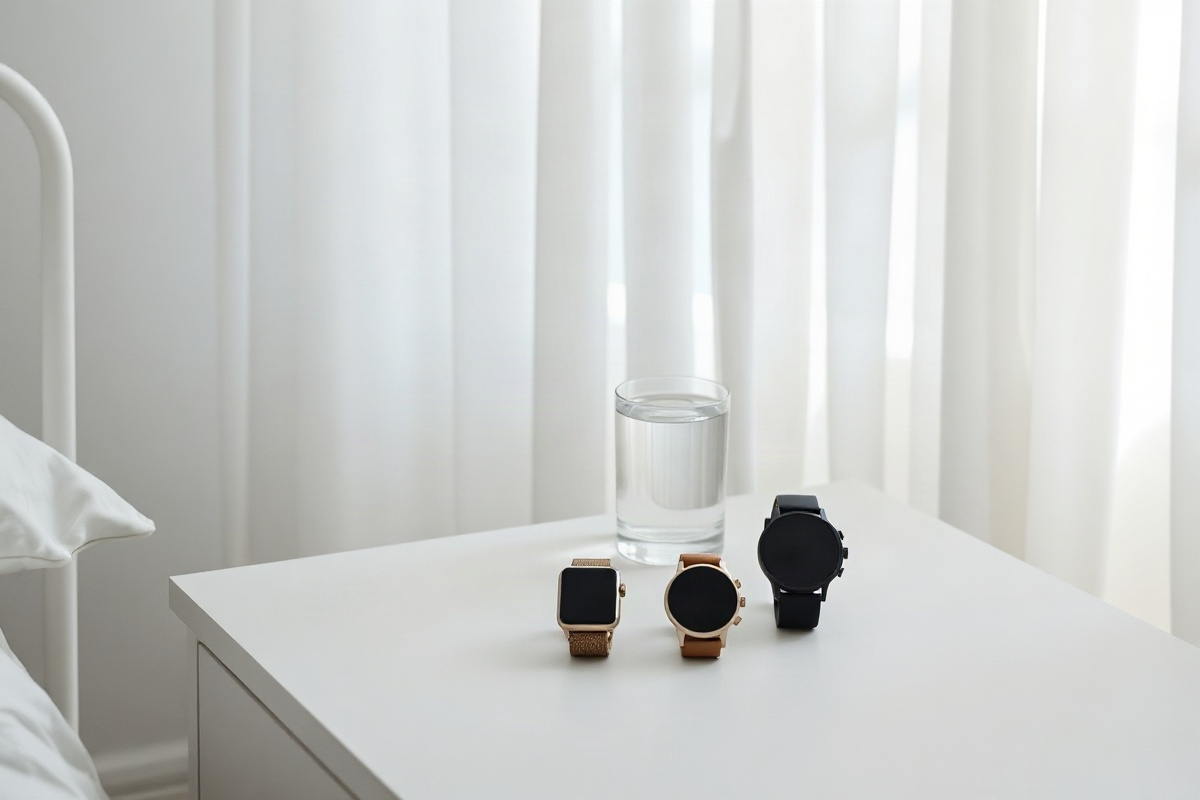
Oura Ring (Generation 3): Launched in 2021 at $299–$349, the Oura Ring uses infrared LEDs to measure heart rate variability, body temperature, and resting heart rate to infer sleep stages. A validation study by Kortelainen et al. (published in Scientific Reports, 2023) found Oura’s sleep-wake detection accuracy was 91–92% compared to PSG, slightly better than Fitbit’s 85%. However, stage accuracy suffered similarly: Oura showed 68% epoch-by-epoch agreement with PSG across all stages. Oura’s advantage is trending heart rate variability, which may flag illness or recovery needs; its disadvantage is the subscription model—$6/month or $60/year for full features.
Apple Watch (Series 8 and later): Apple added sleep tracking in watchOS 9.0 (launched September 2022). Apple Watch uses an accelerometer and heart rate sensor but has released no peer-reviewed validation studies for sleep staging. Apple publicly states the device estimates sleep stages “using motion and heart rate,” but without published evidence, it’s impossible to compare accuracy to PSG or other wearables. This is a significant gap in transparency—Apple’s reputation doesn’t substitute for validation data.
Withings Sleep Analyzer: This is an under-bed mat (not a wearable) that uses contactless radar to detect movement, heart rate, and breathing. A 2019 study in Scientific Reports showed 89% sleep-wake detection accuracy compared to PSG, outperforming Fitbit on that metric. However, Withings Sleep also struggled with stage classification, achieving only 60–65% stage agreement with PSG—similar to Fitbit. The Withings mat costs $299–$349 upfront, with no subscription.
The pattern is clear: all consumer wearables (Fitbit, Oura, Withings, Apple) perform reasonably well at the binary sleep-wake classification task (85–92% accuracy) but struggle significantly with stage classification (56–68% epoch-by-epoch agreement with PSG). Fitbit is neither the best nor the worst; it’s solidly middle-of-the-road on published evidence.
Fitbit is neither the best nor the worst; it’s solidly middle-of-the-road on published evidence.
What Fitbit Tracks Better Than You’d Think: Bedtime, Wake Time, and Total Sleep Duration
While Fitbit struggles with stage accuracy, it’s genuinely reliable for two metrics: when you went to bed and when you woke up. This matters more than it might sound. If you’re trying to fix insomnia or shift work sleep disorder, knowing your actual sleep-wake timing is foundational. Fitbit’s detection of sleep onset and offset—times when you transition from awake to asleep and vice versa—has been validated at 85%+ accuracy across studies. That’s useful for spotting patterns (you’re falling asleep an hour later since you changed jobs) and for coordinating with other interventions (bright light therapy, melatonin, behavioral sleep restriction).
Total sleep duration is similarly reliable, with Fitbit typically within 5–15 minutes of PSG-measured sleep time on average. For clinical purposes, ±15 minutes across 8 hours of sleep is acceptable. Where the error creeps in is on individual nights when Fitbit misclassifies very light sleep or brief arousals as wake time; some nights it might underestimate total sleep by 30–45 minutes. But averaged over a week, Fitbit’s duration estimates are solid. That’s why the first component of Fitbit’s Sleep Score—total duration targeting 7–8 hours—is the most defensible metric on the display.
Time awake after sleep onset (WASO) is moderately reliable. Fitbit detects sustained movement and brief arousals reasonably well, though it can miss very brief, subtle awakenings that PSG would catch. This is clinically relevant for insomnia diagnosis (too many arousals = fragmented sleep), but for the average person optimizing sleep, Fitbit’s WASO estimate gives you honest feedback about sleep fragmentation.
The Sleep Score Formula: Why 60 Might Be Better Than You Think (and Why 90 Might Not Be)
Fitbit’s Sleep Score weights its five components as follows: total sleep duration (40%), sleep consistency (10%), time awake (20%), REM sleep (15%), and deep sleep (15%). This weighting is Fitbit’s internal design choice, not based on clinical research showing these are the “right” proportions for optimal health. In clinical sleep medicine, the priorities are different: eliminating sleep apnea and other sleep disorders comes first, then establishing consistent 7–8 hour duration, then optimizing architecture secondarily.
A concrete example: suppose you sleep 7.5 hours on a consistent schedule with minimal arousals, but your Fitbit estimates only 18% deep sleep and 22% REM (slightly below Fitbit’s targets). Your Sleep Score might be 72, which sounds mediocre. But that 7.5-hour, consistent, consolidated night is genuinely healthy sleep by clinical standards. Your score is suppressed because Fitbit’s algorithm either misestimated your stages (likely) or you genuinely have slightly less deep sleep than Fitbit’s age-generic targets (possible). Either way, a 72 is not a warning sign; it’s a limitation of the scoring model.
Conversely, a Sleep Score of 90+ typically reflects at least 8 hours, consistent schedule, minimal arousals, and high deep+REM percentages. That’s real good sleep. But it’s not “better” than a 78 in any measurable health outcome, because Fitbit doesn’t track sleep apnea severity, periodic leg movements, REM behavior disorder, or a dozen other factors that clinicians assess. A 90 just means you hit Fitbit’s arbitrary thresholds.
A 90 just means you hit Fitbit’s arbitrary thresholds.
Limitations and What Fitbit Doesn’t (and Can’t) Track
Understanding Fitbit’s blind spots is as important as knowing its strengths. Here are the critical limitations:
- No sleep apnea detection: Fitbit’s accelerometer can’t measure oxygen saturation, airflow, or respiratory effort. Obstructive sleep apnea—a condition affecting 15–30% of adults and strongly linked to cardiovascular disease—is completely invisible to Fitbit. If you snore, gasp for air, or wake repeatedly gasping, Fitbit will log those awakenings as arousals but won’t flag the underlying disorder. You need PSG or a home sleep test for diagnosis.
- No periodic leg movement tracking: Restless leg syndrome and periodic limb movement disorder involve repeated involuntary leg kicks during sleep. Fitbit might occasionally detect the gross movement associated with these, but it can’t diagnose or quantify them. A wearable with EMG (muscle electrical activity) sensors could theoretically detect this; accelerometers cannot reliably.
- No EEG-level sleep architecture detail: Fitbit can’t tell you about sleep spindles (brief bursts of brain activity linked to memory consolidation) or K-complexes (another EEG hallmark). If you’re interested in how sleep quality changes with cognitive training or medication, Fitbit won’t capture those nuances.
- No circadian rhythm data: While Fitbit logs sleep-wake times, it doesn’t measure core body temperature or melatonin secretion—the hormonal drivers of your circadian rhythm. A company like Chrono Therapeutics or Rybely uses body temperature sensors to infer circadian phase, but Fitbit doesn’t.
- Limited to accelerometry: Fitbit’s latest models (Sense 2, Inspire 3) still rely on a single three-axis accelerometer for sleep staging. No ECG, no skin temperature, no respiratory rate variability feeds into the stage classification algorithm. Apple Watch and Oura Ring both use heart rate, which gives them slightly more information to work with, but published validation still shows comparable limitations.
How to Use Fitbit Sleep Data Responsibly
Given these limitations, here’s a practical framework for using Fitbit data without overinterpreting it:
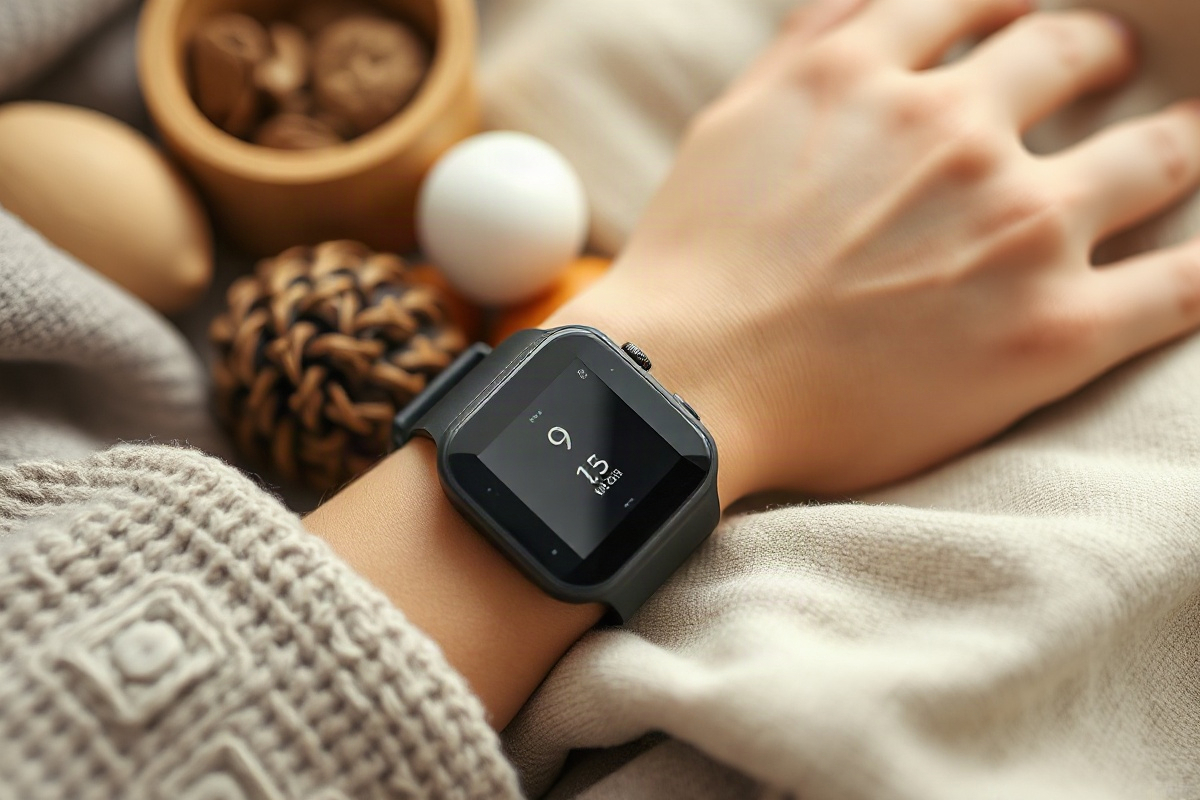
Do use Fitbit for: Tracking total sleep duration trends, identifying consistent bedtimes and wake times, spotting weeks where you’re getting less than 7 hours (which correlates with worse health outcomes), and noticing if your WASO (time awake) suddenly spikes (which might flag stress, a new medication side effect, or an undiagnosed sleep disorder). Use the Sleep Score as a weekly or monthly trend metric—not as a nightly report card. If your 30-day Sleep Score averages 75, and three months ago it averaged 65, that’s real feedback that something improved.
Don’t use Fitbit for: Diagnosing sleep disorders, fine-tuning REM or deep sleep percentages (the data is too noisy), comparing yourself to others (Fitbit’s algorithm is one person’s design choice), or replacing clinical evaluation if you have symptoms like gasping awake, leg kicks, or chronic unrefreshing sleep. If you’re consistently scoring below 50 on Sleep Score, or you’re sleeping 8+ hours and still exhausted, see a sleep medicine doctor and request PSG. Fitbit can be your initial data point to bring to that appointment, but it can’t replace it.
One more practical tip: Fitbit’s sensitivity to sleep onset varies by device. Some models (especially older Inspires) can take 10–20 minutes to recognize you’ve fallen asleep if you lie very still before sleep. If you’re doing relaxation exercises or meditation in bed, Fitbit might start logging you as asleep before you actually are. This introduces small errors into your bedtime and sleep duration. Knowing this, you can mentally adjust—add 10 minutes to your “sleep onset time” if you know you meditate or read for a while before drifting off.
Knowing this, you can mentally adjust—add 10 minutes to your “sleep onset time” if you know you meditate or read for a while before drifting off.
Fitbit Sleep Score vs. Clinical Sleep Medicine: When to Upgrade Your Expectations
A Fitbit is a quantified-self gadget, not a medical device (despite FDA clearance for some Fitbit features like ECG). Fitbit helps you answer the question “Am I sleeping enough and consistently?” It does not reliably answer “What are my sleep stages?” or “Do I have a sleep disorder?” If you’re managing a diagnosed sleep disorder—insomnia, sleep apnea, narcolepsy, REM sleep behavior disorder—you need clinical monitoring. For insomnia, that means cognitive behavioral therapy for insomnia (CBT-I) with a sleep specialist or trained therapist, not just Fitbit tracking. For sleep apnea, it’s CPAP or another airway treatment, checked with follow-up PSG. Fitbit can track adherence (are you wearing your mask every night?) and total sleep duration while on CPAP, but it can’t replace the clinical feedback loop.
That said, Fitbit data can be a useful entry point. If you notice via Fitbit that your sleep has deteriorated—duration dropped from 7.5 hours to 5.5 hours, or your awakenings doubled—that’s a concrete reason to schedule a sleep evaluation. Fitbit arms you with specific observations to discuss with a clinician, which makes your appointment more efficient and directed. The device functions best as a communication tool, not a diagnosis tool.
Alternatives to Fitbit: When You Might Want Something Different
If Fitbit’s limitations frustrate you, here are alternatives worth considering:
Oura Ring (Generation 3, $299–$349): Slightly better sleep-wake accuracy than Fitbit (91% vs. 85%), requires a subscription ($6/month or $60/year) for full sleep insights. The advantage: heart rate variability trending, which can flag illness or recovery needs before symptoms appear. The disadvantage: still can’t accurately stage sleep, and you’re paying a subscription for data Fitbit includes free. Oura’s primary audience is athletes and biohackers willing to pay for HRV insights; if you just want sleep tracking, Fitbit is more economical.
Withings Sleep Analyzer mat ($299–$349): Non-wearable option; you place it under your mattress. Detects sleep-wake with 89% accuracy, no subscription. Advantage: one-time purchase, no charging (it’s powered by a bedside cable). Disadvantage: same stage accuracy limitations as Fitbit, can’t be worn outside the home. Best for someone who wants passive sleep tracking without wearing anything to bed.
Clinical-grade portable sleep test (e.g., WatchPAT, ApneaLink, ResMed ApneaLink Air, $2,000–$4,000 or via insurance referral): These are home sleep apnea tests that measure oxygen saturation, airflow, and respiratory effort. Not designed for stage accuracy, but they can diagnose sleep apnea and other breathing-related disorders. If you suspect sleep apnea (snoring, witnessed breathing pauses, daytime sleepiness), this is a better investment than a wearable.
In-lab polysomnography ($3,000–$5,000, often covered by insurance with clinical indication): Gold standard, not a consumer product. But if sleep is seriously impacting your health or you have complex symptoms, insurance will typically cover PSG if a sleep medicine doctor orders it. This gives you the most accurate stage classification and rules out rare disorders like REM sleep behavior disorder or periodic leg movement disorder.
For most people without a diagnosed sleep disorder who want to optimize sleep habits, Fitbit remains a solid choice because it’s affordable (Inspire 3, $99; Charge 6, $159; Sense 2, $299), requires no subscription, and gives you reliable data on duration and consistency. If you’re paying close attention to stages or expecting clinical-grade accuracy, recalibrate your expectations.
Small changes, real momentum
Get practical guides and templates you’ll actually use — a few thoughtful emails a month.
Frequently Asked Questions
Does Fitbit’s Sleep Score predict daytime performance or health outcomes?
Not directly validated. Fitbit hasn’t published studies showing that a Sleep Score of 85 versus 65 correlates with better cognitive performance, mood, immune function, or cardiovascular health. What is validated is that sleeping 7–8 hours consistently, with minimal fragmentation, supports better health outcomes—and those components feed into the Sleep Score. So a high score is likely correlated with good outcomes, but the score itself isn’t the mechanism; consistent 7–8 hour sleep is. If you’re exhausted despite a Fitbit Sleep Score of 80, you have a mismatch—either Fitbit’s data is inaccurate (possible; it underestimates stage quality), or you have an underlying sleep disorder Fitbit can’t detect (sleep apnea, narcolepsy, REM behavior disorder). See a sleep medicine specialist if this is happening to you.
Should I adjust my sleep habits based on Fitbit’s deep and REM percentages?
Not aggressively. Fitbit’s stage estimates carry ±20–25% error margins on individual nights. Aiming for Fitbit’s targets (15–20% deep, 20–25% REM) is reasonable as a ballpark, but don’t obsess if one night shows 12% deep sleep. Age matters: a 55-year-old naturally has less deep sleep than a 25-year-old, and Fitbit’s algorithm doesn’t account for this. Sleep duration and consistency are far more important than hitting exact stage percentages. If you want to optimize sleep architecture legitimately, work with a sleep coach or clinician who can discuss circadian timing, exercise, caffeine cutoff, and temperature—behaviors with real evidence. Fitbit will track the result, but micromanaging Fitbit’s stage percentages is chasing noise.
Can Fitbit detect sleep apnea?
No. Fitbit can log sudden awakenings or elevated heart rate during sleep, which might flag fragmented sleep, but it cannot diagnose sleep apnea. Apnea is defined by oxygen desaturation and respiratory effort, which Fitbit’s accelerometer cannot measure. If you suspect sleep apnea (loud snoring, witnessed breathing pauses, daytime sleepiness, weight gain, or high blood pressure), ask your doctor for a home sleep test or in-lab PSG, not Fitbit tracking. Fitbit’s data might support your case for evaluation—”I’m waking 15 times per hour according to my tracker”—but Fitbit can’t confirm the diagnosis.
Verdict: Is Fitbit Sleep Tracking Worth Trusting?
Fitbit sleep tracking is trustworthy for two specific jobs: telling you whether you’re getting enough total sleep (7–8 hours) and whether your sleep schedule is consistent. On these metrics, validation studies show 85%+ accuracy. It’s worth integrating into a sleep optimization plan if you’re trying to build healthy sleep habits—go to bed at the same time, get 7–8 hours, and minimize middle-of-the-night wakefulness. For these goals, Fitbit provides reliable feedback at an affordable price.
Fitbit is not trustworthy for fine-grained sleep stage classification. Its deep and REM sleep percentages carry significant error (±15–25%) and shouldn’t drive medical decisions or aggressive behavior changes. If your Fitbit shows you’re getting only 60 minutes of deep sleep per night, you might actually be getting 45 minutes or 75 minutes. Without polysomnography, you can’t know which. Similarly, Fitbit cannot detect sleep apnea, REM behavior disorder, or other sleep pathologies—gaps that matter if you have risk factors or symptoms.
The Sleep Score is a marketing concept that packages legitimate sleep metrics (duration, consistency, some fragmentation detection) into a single number. It’s useful as a trend metric (is your sleep better or worse this month?) and as motivation (seeing your score drop after late nights reinforces good habits), but it’s not a clinical diagnosis or a proxy for health. A score of 75 is not a warning sign if you’re sleeping 7.5 hours consistently and feeling rested. A score of 90 is not a guarantee of health if you have untreated sleep apnea.
Bottom line: Buy a Fitbit if you want affordable sleep duration and consistency tracking. Skip the sleep stage obsession. Wait for a clinical sleep test if you have symptoms of a sleep disorder. If you’re between Fitbit ($99–$299) and a clinical evaluation, start with Fitbit to document your sleep—bring that data to a sleep medicine appointment and request PSG if your symptoms don’t match the data or persist despite good Fitbit metrics.
VERDICT SUMMARY
Buy: Fitbit Inspire 3 ($99) or Charge 6 ($159) if you want reliable sleep duration and wake-time tracking to build consistent sleep habits. No subscription required. Best value.
Skip: Fitbit for sleep stage micromanagement or as a substitute for clinical evaluation if you have sleep apnea symptoms, chronic unrefreshing sleep, or frequent unexplained arousals.
Wait: For better sleep-staging accuracy; consumer wearables still max out at 56–68% stage accuracy compared to polysomnography. If stage detail matters for your health, ask your doctor for PSG instead of relying on Fitbit.
Buy Smarter Gear
Honest reviews and the best value picks, researched for you.