
Your bed is probably the most expensive piece of furniture you own that you actively, and quite literally, fight against every single night. You toss, you turn, you wake up with a stiff neck or a sweaty back. That plush pillow-top mattress and fluffy down comforter might look inviting, but they’re often trapping heat and giving your spine zero support. The real secret to better sleep isn’t a $4,000 mattress; it’s dialing in the three layers that actually touch your body: the pillow, the sheets, and the blanket. Get these wrong, and no amount of white noise or sleep tracking will save you. Get them right, and you can transform a mediocre bed into a sleep sanctuary.
| Pick | Best for |
|---|---|
| The Case for a Smart Pillow: More Than Just a Place to Rest Your Head | Most pillows are designed for showroom comfort, not eight hours of restorative sleep. |
| Cooling Bedding: Your Defense Against Night Sweats | If you’ve ever woken up drowning in a puddle of your own sweat, you understand the primal … |
| The Weighted Blanket Revolution: Deep Pressure Stimulation Explained | Weighted blankets exploded in popularity for a reason: the science behind them is compelli… |
| Smart Pillow Deep Dive: Zamat vs. Sonofit | Putting these two popular smart pillows head-to-head reveals a fundamental choice: do you … |
| Cooling Bedding Breakdown: Materials Matter Most | When evaluating cooling bedding, you’re really evaluating fibers and weaves. |
| Choosing Your Weighted Blanket: A Buyer’s Checklist | Before you click “buy,” run through this list to avoid an expensive mistake. |
11 min read
In This Article
- The Case for a Smart Pillow: More Than Just a Place to Rest Your Head
- Cooling Bedding: Your Defense Against Night Sweats
- The Weighted Blanket Revolution: Deep Pressure Stimulation Explained
- Smart Pillow Deep Dive: Zamat vs. Sonofit
- Cooling Bedding Breakdown: Materials Matter Most
- Choosing Your Weighted Blanket: A Buyer’s Checklist
- The Limitations and Trade-Offs
- Alternatives to Consider
- Verdict Box
- Frequently Asked Questions
Key Takeaways
- The Case for a Smart Pillow: More Than Just a Place to Rest Your Head
- Cooling Bedding: Your Defense Against Night Sweats
- The Weighted Blanket Revolution: Deep Pressure Stimulation Explained
- Smart Pillow Deep Dive: Zamat vs. Sonofit
The Case for a Smart Pillow: More Than Just a Place to Rest Your Head
Most pillows are designed for showroom comfort, not eight hours of restorative sleep. A true performance pillow addresses two critical factors: spinal alignment and temperature regulation. When your neck is kinked at an awkward angle, you’re straining muscles and compromising your airway, which can lead to snoring and disrupted sleep cycles. The Zamat Contour Memory Foam Pillow, priced around $70, is a prime example of getting the fundamentals right. Its wave design is engineered to cradle the neck whether you’re a back or side sleeper, lifting the head just enough to keep the spine in a neutral position. The included cooling gel pad is a simple but effective addition, pulling heat away from the contact points. This isn’t just marketing fluff; proper alignment reduces pressure on nerves and muscles, which is why physical therapists often recommend ergonomic pillows for patients with chronic pain.
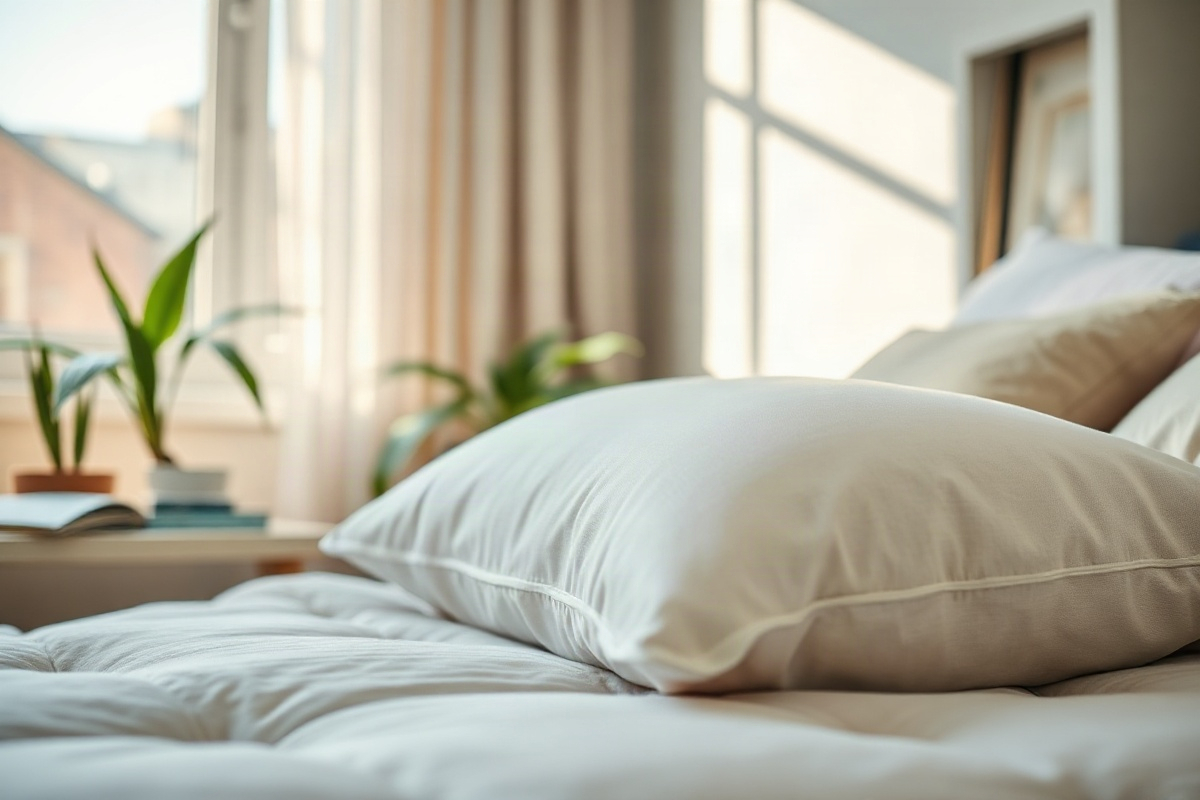
Looking at the higher-tech end, the Sonofit Bluetooth Pillow (approximately $90) attempts to solve a different problem: noise. With built-in, slim speakers, it allows you to play white noise, guided meditations, or podcasts directly into the pillowcase without disturbing a partner. The appeal is obvious for light sleepers or those who share a bed. Sonofit claims the speakers are completely flat to avoid creating uncomfortable pressure points. However, the battery life is limited to about 10 hours per charge, making it a device you have to manage, not a set-and-forget solution. The trade-off is clear: you gain personalized soundscapes but add a layer of maintenance that a traditional pillow avoids.
The trade-off is clear: you gain personalized soundscapes but add a layer of maintenance that a traditional pillow avoids.
Cooling Bedding: Your Defense Against Night Sweats
If you’ve ever woken up drowning in a puddle of your own sweat, you understand the primal need for cooling bedding. The science is simple: for your body to initiate and maintain sleep, your core temperature needs to drop. Traditional cotton, while breathable, can retain moisture. High-thread-count sheets are often woven so tightly they become less breathable. The solution lies in materials that actively wick heat and moisture away. Bamboo-derived viscose, like that used in Cozy Earth’s Bamboo Sheet Set (starting around $269 for a queen), is a superstar here. It’s not just soft; it’s highly porous and absorbent, pulling sweat away from the skin much more effectively than standard cotton. In documented owner reports, users consistently highlight waking up feeling dry even in warmer rooms.
For the ultimate in temperature control, phase change material (PCM) is the emerging technology to watch. Bedding like the Cool-Jam Performance Series Pillowcases (about $40 each) incorporates micro-encapsulated PCMs that absorb excess body heat as you fall asleep, storing it, and then releasing it back if your body temperature drops too low. Think of it as a thermal battery for your skin. This isn’t a gimmick; it’s a technology derived from high-performance athletics wear. Unlike simply feeling cool to the touch initially, PCM provides dynamic regulation throughout the night. The downside? Cost. Advanced materials command a premium, and the cooling effect, while measurable, may be more subtle than the marketing suggests for some sleepers.
The Weighted Blanket Revolution: Deep Pressure Stimulation Explained
Weighted blankets exploded in popularity for a reason: the science behind them is compelling. The principle is Deep Pressure Stimulation (DPS), a therapeutic technique that uses firm, gentle pressure to calm the nervous system. This pressure encourages the production of serotonin and melatonin while reducing cortisol, the stress hormone. It’s the same reason a firm hug or swaddling a baby feels so soothing. The Gravity Blanket, one of the originators, popularized the rule of thumb: choose a blanket that is roughly 10% of your body weight. A 15-pound blanket, for instance, is typically recommended for a 150-pound person and costs around $165. The even distribution of glass beads sewn into small pockets is crucial; a poorly made weighted blanket can feel like a lumpy sandbag.
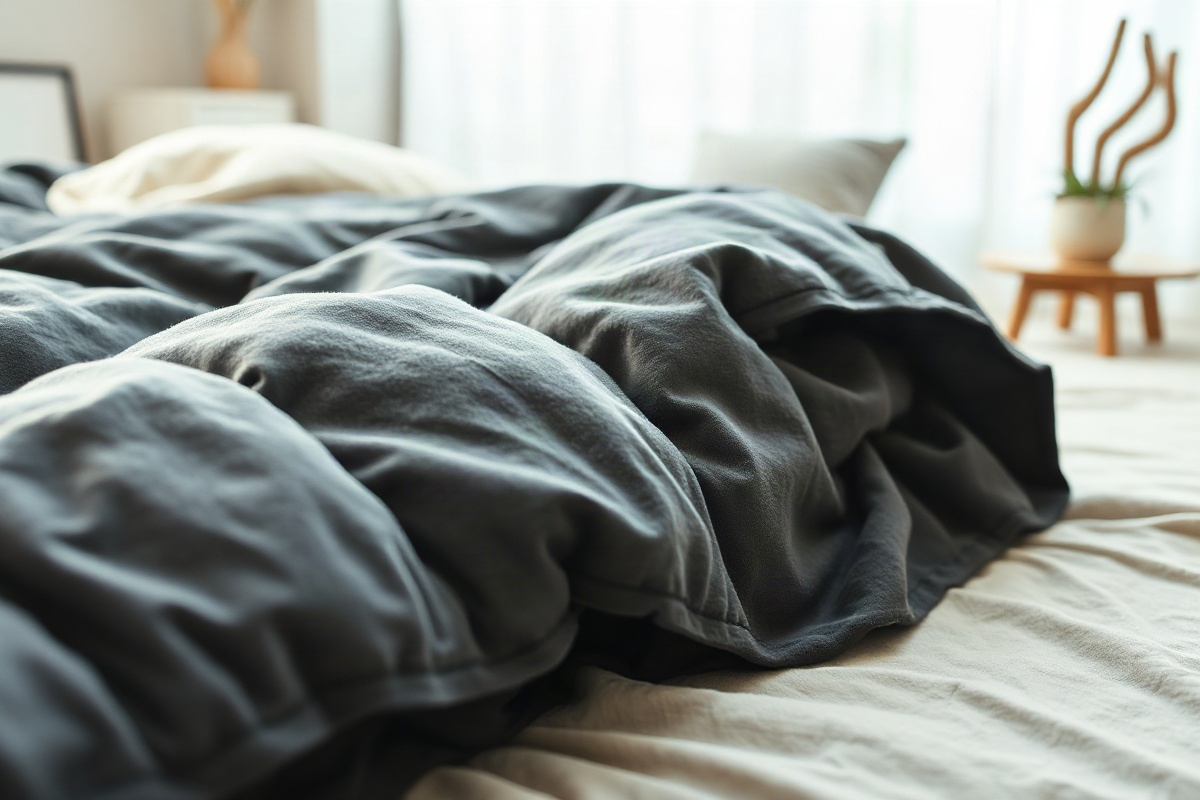
But not all weighted blankets are created equal for hot sleepers. The classic Gravity Blanket uses a minky polyester exterior, which can be too warm for many. This is where brands like Bearaby have carved out a niche. Their Tree Napper blanket (approximately $249) is knit from TENCEL™ Lyocell, a sustainably sourced material known for its breathability. Because it’s a knit, it’s inherently full of holes, allowing for far greater air circulation than a typical duvet-style weighted blanket. The trade-off is a different feel; it’s less of a traditional “blanket” experience and more of a heavy, open-weave throw. For those who want the calming pressure without the sauna effect, this material innovation is a game-changer, though the price tag is significantly higher.
For those who want the calming pressure without the sauna effect, this material innovation is a game-changer, though the price tag is significantly higher.
Smart Pillow Deep Dive: Zamat vs. Sonofit
Putting these two popular smart pillows head-to-head reveals a fundamental choice: do you prioritize physical comfort or digital features? The Zamat Contour Pillow is a workhorse focused on biomechanics. The high-density memory foam provides consistent support that doesn’t flatten out overnight. The removable, washable cover with its cooling gel layer addresses hygiene and temperature, two common pillow complaints. It’s a passive solution that works 24/7 without batteries or Bluetooth pairing. For someone with neck pain or who simply wants a better-supported night’s sleep, this is the logical choice. Its limitation is its specificity; the contour shape isn’t for everyone, especially strict stomach sleepers who need a very flat pillow.
The Sonofit Bluetooth Pillow, conversely, is an active sleep aid. Its value is in its functionality. If external noise—a snoring partner, street traffic, a noisy neighbor—is your primary sleep disruptor, the ability to pipe in masking sound directly into your ears can be more effective than a room speaker. However, you’re introducing points of failure. The internal battery degrades over time, the speakers could eventually fail, and you have to remember to charge it. The pillow’s core comfort is also secondary to its tech; it’s a standard shredded memory foam fill, which is comfortable but doesn’t offer the targeted support of a contour design. It’s best for a tech-savvy sleeper whose main problem is auditory and who doesn’t mind a bit of gadget management.
Cooling Bedding Breakdown: Materials Matter Most
When evaluating cooling bedding, you’re really evaluating fibers and weaves. Here’s a quick guide to the most common options:
- Bamboo Viscose/Rayon: Excellent moisture-wicking, incredibly soft, and naturally antibacterial. Brands like Cozy Earth and Cariloha use this. It feels cool immediately upon touch. Downsides: It can be prone to pilling over time and is a bit more delicate than cotton.
- TENCEL™ Lyocell: Similar to bamboo but often considered more sustainable due to a closed-loop production process. It’s highly absorbent and has a smooth, drapey feel. Bearaby uses this for their weighted blankets. It’s a premium, high-performance fiber.
- Linen: The king of breathability. Linen’s thick, hollow fibers allow for exceptional air flow, making it ideal for very hot sleepers. It gets softer with every wash. The drawback is its distinct, slightly rough texture that isn’t for everyone, and it’s often the most expensive option.
- Performance Polyester: Don’t write it off. Modern performance polyesters, like those used in athletic clothing, are engineered with moisture-wicking properties. They are durable and affordable but may not have the natural feel of bamboo or TENCEL.
The best choice depends on your sensitivity to texture, your budget, and just how hot you tend to sleep. Linen is the ultimate cooler, while bamboo offers a blissful blend of softness and function.
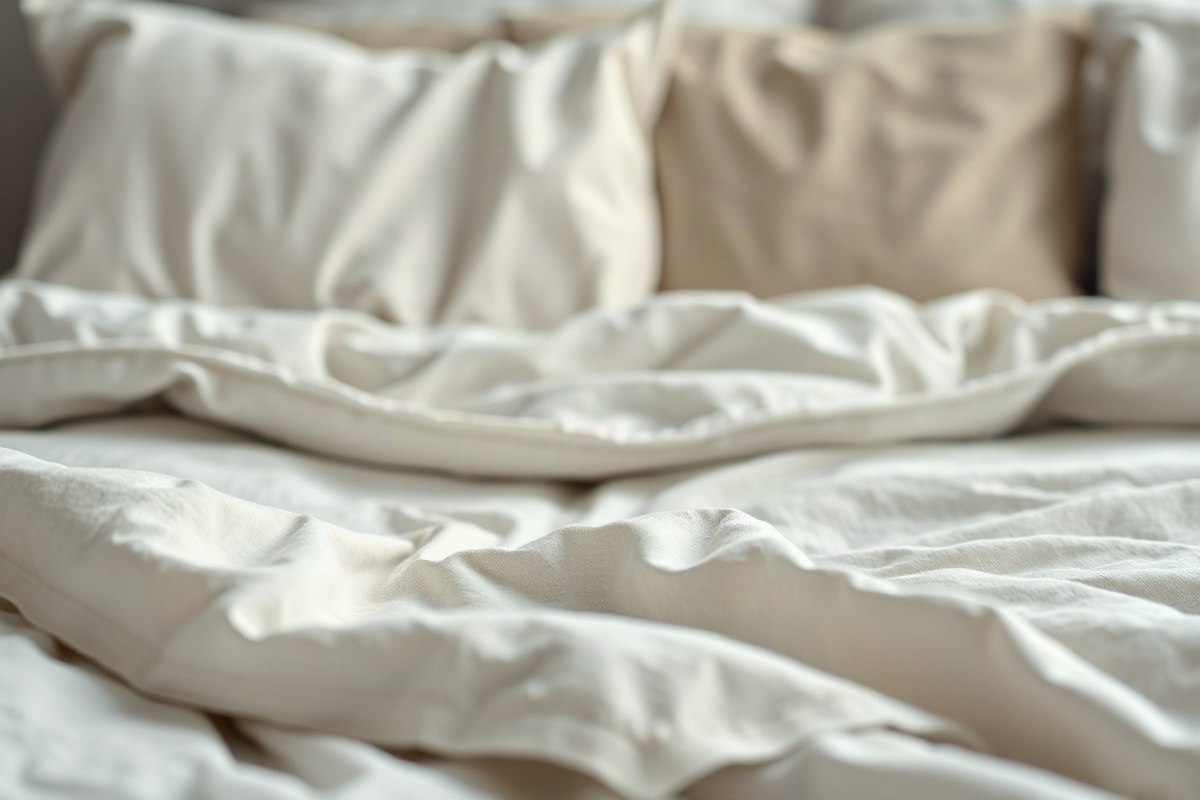
Linen is the ultimate cooler, while bamboo offers a blissful blend of softness and function.
Choosing Your Weighted Blanket: A Buyer’s Checklist
Before you click “buy,” run through this list to avoid an expensive mistake. First, get the weight right. The 10% of body weight is a guideline, not a strict rule. If you are between weights, it’s generally better to size down for your first blanket to ensure it feels comforting, not crushing. Second, inspect the fill. Glass beads are superior to plastic pellets; they are smaller, denser, and distribute weight more evenly without creating a noisy, crunchy texture. Third, consider the cover. Is it removable and machine washable? This is non-negotiable for hygiene. A weighted blanket is cumbersome to clean, so a zip-off cover is essential. Fourth, think about size. Do you want a blanket that just covers you, or one large enough to share with a partner? A larger blanket will be heavier, so make sure the weight is still appropriate for you personally.
Finally, match the material to your sleep style. If you sleep hot, a knit blanket like the Bearaby or a blanket with a cooling bamboo cover is mandatory. If you’re always cold, a plush, minky cover will add warmth along with pressure. Brands like Baloo Living offer a “Cooling” version of their weighted blanket with a cotton-duvet cover, which is a great middle-ground option. Don’t get seduced by low prices on unknown Amazon brands; poor construction can lead to the beads clumping in one corner, rendering the blanket useless and uncomfortable.
The Limitations and Trade-Offs
No sleep product is a magic bullet. Smart pillows with electronics have a finite lifespan dictated by their batteries and components. A standard memory foam pillow can last 3-5 years; a Bluetooth pillow might become a brick in half that time. Cooling bedding, while effective, can’t overcome a room that’s genuinely too hot. If your bedroom is 80°F, even the best bamboo sheets will only provide marginal relief; you need to address the ambient temperature first. Weighted blankets are not recommended for children under two or for individuals with certain medical conditions like sleep apnea, claustrophobia, or respiratory issues. The weight can sometimes feel restrictive and may be difficult to move under for some people.

There’s also a significant cost consideration. Investing in a high-quality pillow ($70), a set of premium cooling sheets ($250+), and a well-made weighted blanket ($150-$300) can easily run over $500. This is a substantial investment in sleep hygiene. While the benefits can be profound, it’s not a small decision. It’s often wiser to upgrade one component at a time, starting with the item that addresses your biggest pain point—be it neck pain, night sweats, or anxiety.
Alternatives to Consider
If the products highlighted don’t fit your needs or budget, here are other proven options. For pillow alternatives, the Tempur-Pedic TEMPUR-Cloud pillow ($99) is a classic for a reason, offering adaptive support without a rigid contour shape. For a more budget-friendly cooling pillow, the Beckham Hotel Collection Gel Pillow (around $40 for a pack of two) uses a gel-infused fiber fill that provides a cooler sleep surface. In the bedding aisle, Target’s Threshold performance sheet sets (around $70 for a queen) offer well-regarded, budget-conscious cooling options made from a polyester-spandex blend that wicks moisture effectively.
In the weighted blanket space, the Baloo Living Weighted Blanket ($165 for a 15lb queen) is a strong contender with a 100% cotton shell and glass bead fill, striking a great balance between quality, breathability, and price. For a luxurious, all-natural option, the Silk & Snow Weighted Blanket uses a cotton shell filled with natural sand, though it comes in at a higher price point of around $215. The key is to read reviews focusing on the specific issues you care about: breathability, bead distribution, and durability of the cover.
Verdict Box
Buy: If you consistently wake up with neck pain or feel hot and sweaty, start with a targeted upgrade. Prioritize a Zamat-style contour pillow for alignment or a set of bamboo sheets for temperature control. The improvement will be immediate and tangible.
Skip: Don’t splurge on a high-tech Bluetooth pillow unless auditory disturbance is your sole and primary sleep problem. The added complexity and limited lifespan aren’t worth it for most people.
Wait: If you’re considering a weighted blanket but are unsure about the weight or feel, see if you can try one out first. Some therapists offices have them, or a friend might own one. The sensation is unique and not for everyone.
Upgrading your sleep is a process of elimination. You start with the biggest point of friction—the aching neck, the drenched t-shirt, the racing mind—and you find the tool that directly addresses it. A smart pillow corrects your posture. Cooling bedding manages your microclimate. A weighted blanket soothes your nervous system. You don’t need to buy all three at once. Pick the battle you lose most often and equip yourself to win it. The goal isn’t a perfect night’s sleep every single time; it’s stacking the odds so heavily in your favor that good sleep becomes the default, not the exception. Start with one proven product, master it, and then consider the next. Your morning self will thank you.
Small changes, real momentum
Get practical guides and templates you’ll actually use — a few thoughtful emails a month.
Frequently Asked Questions
Are weighted blankets safe for everyone to use?
No, weighted blankets are not universally safe. They are generally not recommended for infants and young children under the age of two due to the risk of suffocation. Individuals with conditions that affect breathing, such as asthma, COPD, or sleep apnea, should consult a doctor before use, as the added weight can restrict chest movement. People with circulatory issues or diabetes should also seek medical advice. The key safety principle is to ensure you can easily remove the blanket yourself and that it does not feel restrictive or cause anxiety.
How often should I wash my cooling sheets?
You should wash your cooling sheets approximately once a week to remove body oils, sweat, and dead skin cells that can clog the fibers and reduce their breathability and wicking capabilities. Always follow the manufacturer’s care instructions precisely. Bamboo viscose and TENCEL often require a gentle cycle with cold water and a low-heat tumble dry or, ideally, line drying to prevent damage and shrinkage. Avoid using fabric softeners or bleach, as they can coat the fibers and inhibit their moisture-wicking properties, effectively ruining their cooling effect over time.
Can a smart pillow really help with snoring?
An ergonomic smart pillow that promotes proper spinal alignment, like the Zamat Contour Pillow, can potentially help with snoring in specific cases. If your snoring is caused by your head position kinking your airway, a pillow that keeps your neck straight can open up the passage and reduce the vibrations that cause snoring. However, it is not a cure for sleep apnea or snoring caused by other underlying medical issues. For positional snorers, the right pillow can make a difference, but for chronic, loud snoring, a medical evaluation is necessary to rule out more serious conditions.
Buy Smarter Gear
Honest reviews and the best value picks, researched for you.