The Short Answer: Can a Smartwatch Detect Sleep Apnea?
The short answer is: no, a consumer smartwatch cannot diagnose sleep apnea. However, the latest generation of wearables from Apple, Samsung, and Withings can act as powerful screening tools by identifying high-risk patterns indicative of the condition. They use a combination of blood oxygen sensing (SpO2), heart rate monitoring, and movement data to flag nights with repeated breathing disturbances. A smartwatch can give you a strong nudge to seek a professional evaluation, but it is not a replacement for a medical-grade sleep study.
How Sleep Apnea Detection Actually Works
To understand what a smartwatch can and cannot do, it’s crucial to understand how sleep apnea is clinically diagnosed. The gold standard is an in-lab polysomnogram (PSG). This test uses a multitude of sensors to track brain waves, eye movement, muscle activity, heart rhythm, breathing effort, airflow, and blood oxygen levels. A sleep technician scores the data, counting the number of times your breathing stops (apnea) or becomes shallow (hypopnea) per hour of sleep. This results in the Apnea-Hypopnea Index (AHI). An AHI of 5-15 indicates mild sleep apnea, 15-30 is moderate, and anything over 30 is considered severe.

Consumer wearables operate on a completely different, simplified principle. They lack the direct airflow and brain wave sensors of a PSG. Instead, they rely on proxy measurements. The most important of these is blood oxygen saturation (SpO2). During a sleep apnea event, breathing stops, causing blood oxygen levels to drop. A watch with an SpO2 sensor can detect these periodic dips, known as desaturations. It then correlates these dips with heart rate data (which often spikes as the body reacts to the lack of oxygen) and movement data (as you may briefly stir or change position).
The algorithms then look for clusters of these events. A single oxygen dip might be meaningless, but a pattern of dozens or hundreds of dips throughout the night, especially when paired with elevated heart rate, is a strong statistical indicator of disordered breathing. It’s this pattern recognition, not direct measurement of airflow, that forms the basis of a smartwatch’s “sleep apnea” alert.
The Critical Role of Validation Studies
For a feature this serious, marketing claims are not enough. The medical community relies on validation studies published in peer-reviewed journals. These studies compare the wearable’s results against the gold-standard PSG in a controlled setting. A high correlation between the watch’s estimated AHI and the lab’s measured AHI gives the feature credibility. As we’ll see, not all brands have invested equally in this rigorous scientific validation, which is a key differentiator for consumers.
Apple Watch Sleep Apnea Detection: The FDA-Cleared Leader
In 2024, Apple made a significant leap by Apple Watch Series 10 and Apple Watch Ultra 2 gaining FDA clearance for a sleep apnea feature. This is a big deal because FDA clearance signifies that the agency has reviewed data and determined the device is effective and safe for its intended use—in this case, as a pre-diagnostic screening tool for adults 22 and older.
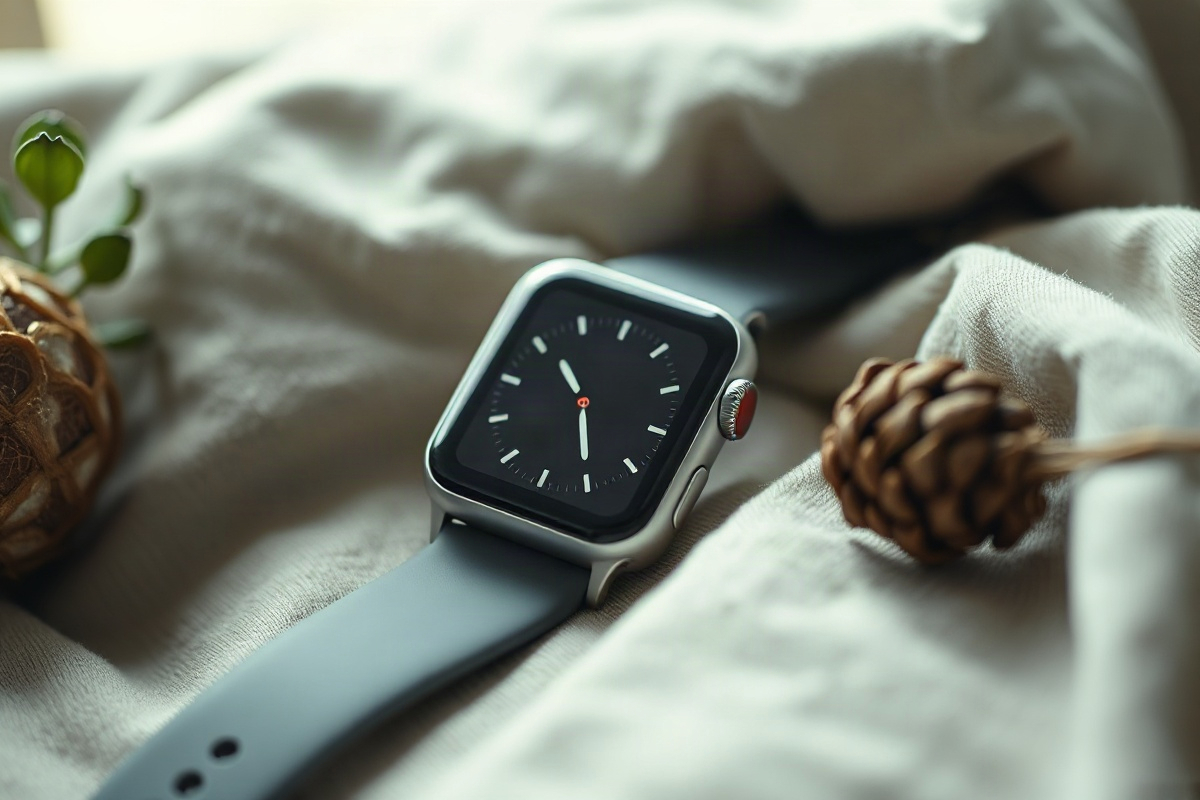
The feature, which leverages the watch’s always-on blood oxygen sensor, is designed to be used over time. It requires users to track their sleep with the watch for a minimum number of nights to establish a baseline. If it detects a pattern suggestive of sleep apnea (typically an estimated AHI greater than 15 events per hour), it will notify the user and encourage them to speak with a doctor. The key here is that it provides an estimated AHI, moving beyond a simple “high risk” flag.
This clearance was backed by a multi-year study with over 2,500 participants. The results, while not yet fully published in a journal, were deemed robust enough by the FDA to support the claim. It’s important to note that this feature is currently available only on the newest models (Series 10 and Ultra 2) and is part of a paid Apple Health subscription service, highlighting Apple’s move into the digital health market.
Samsung Galaxy Watch Sleep Apnea Feature
Samsung entered the sleep apnea screening arena with the Galaxy Watch 7 and Galaxy Watch Ultra. Similar to Apple, Samsung’s feature also received FDA clearance, but with a slightly different application. It is designed to detect signs of moderate to severe obstructive sleep apnea (OSA) by spotting breathing interruptions during sleep.
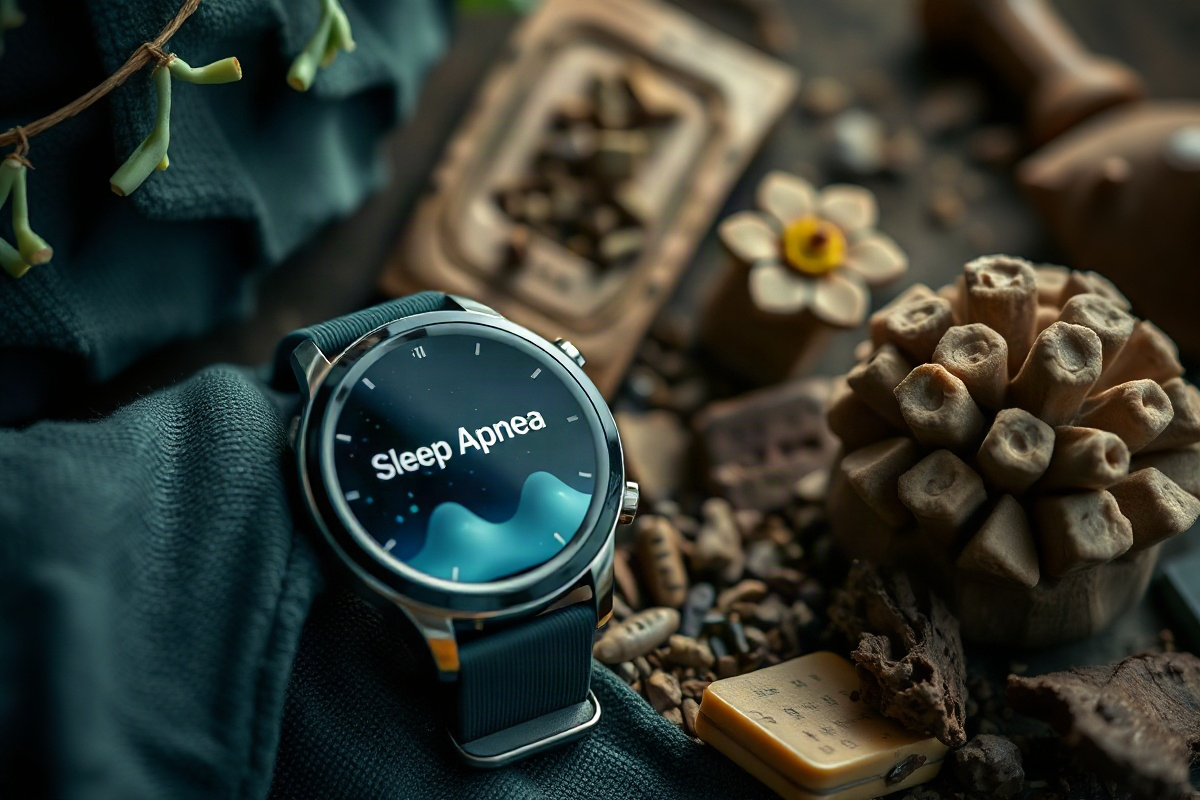
The Samsung approach also uses SpO2 monitoring throughout the night. Its algorithm analyzes the data over a two-night period. If the pattern suggests a high likelihood of sleep apnea, the watch will provide a result and recommend the user see a healthcare provider. A crucial distinction is that Samsung’s feature is a one-time spot check, not a long-term monitoring tool like Apple’s. This makes it faster for a user to get an initial risk assessment but potentially less comprehensive for tracking changes over time.
This feature is available on the latest models running Samsung’s BioActive Sensor and requires a Samsung phone with the Samsung Health Monitor app. Like Apple, Samsung has invested in clinical validation to secure FDA clearance, though the specific study data is not as publicly detailed at this time.
Withings ScanWatch: The ECG and Overnight Oximetry Hybrid
Withings ScanWatch 2 takes a unique approach. While it hasn’t pursued FDA clearance for a specific “sleep apnea detection” feature, it is equipped with a medically certified ECG and a pulse oximeter for overnight SpO2 monitoring. The watch can automatically detect abnormally low blood oxygen levels during sleep and generate a detailed report of these events.
This report can be incredibly valuable. You can see a graph of your blood oxygen levels throughout the night, pinpointing exactly when significant dips occurred. You can then take this report, along with the watch’s ECG data, to a physician. A doctor can look at the pattern of desaturations and use it as a strong piece of evidence to justify ordering a formal at-home sleep test or an in-lab PSG.
The Withings strategy is less about the watch making a diagnosis and more about equipping the user with high-quality, clinically-relevant data to facilitate a conversation with a healthcare professional. It’s a more hands-on approach that appeals to data-driven individuals who want to see the raw numbers behind the algorithm’s conclusion.
Limitations and What These Watches Cannot Do
It is absolutely vital to understand the limitations of this technology. First and foremost, these devices are screening tools, not diagnostic devices. A “low risk” result from your watch does not rule out sleep apnea, especially mild or central sleep apnea (which is caused by a neurological issue, not a physical obstruction). Only a full sleep study can provide a definitive diagnosis.
Second, accuracy can be affected by numerous factors. A loose watch band, tattoos on the wrist, cold hands, or even certain sleep positions can interfere with the optical sensors’ ability to get a clean reading. The algorithms are also tuned for a specific demographic and may be less accurate for individuals with pre-existing heart conditions, arrhythmias, or other sleep disorders.
Finally, these features are not treatments. A watch can alert you to a problem, but it cannot fix it. If you receive a positive screen, the next step is to work with a doctor on a treatment plan, which may involve CPAP alternatives, an anti-snoring mouthguard, or lifestyle changes. The watch does not replace the physician.
Who Should Consider Using This Technology?
These watch features are ideal for a specific audience. If you are a heavy snorer, someone who wakes up gasping for air, or a person who suffers from relentless daytime fatigue despite a full night’s sleep, a smartwatch with sleep apnea screening can be a convenient first step. It’s far less intimidating than immediately scheduling a sleep study and can provide the objective data needed to take that next step seriously.
Partners of loud snorers are also a key demographic. It can be frustrating to tell someone they stop breathing at night, only to be dismissed. Showing them a graph from their own watch that indicates dozens of oxygen desaturations is a powerful motivator to see a doctor. For new parents who are already sleep-deprived, understanding if their exhaustion is compounded by an underlying sleep disorder is invaluable.
However, if you have already been diagnosed with sleep apnea, these watches are not for managing your condition. They cannot titrate CPAP pressure or replace the data from a CPAP machine. Their role is in pre-diagnosis screening and raising awareness.
Key takeaways
- Smartwatches from Apple and Samsung have FDA clearance to screen for sleep apnea, but they are not diagnostic tools. They provide a risk assessment, not a medical diagnosis.
- The technology works by detecting patterns of blood oxygen dips (desaturations) and elevated heart rates during sleep, which are proxies for breathing interruptions.
- Apple’s feature requires long-term monitoring, while Samsung’s is a two-night spot check. Withings provides detailed SpO2 reports for you to share with a doctor.
- A smartwatch alert should be a catalyst to see a doctor for a formal sleep test, not a reason to self-treat. Explore all sleep apnea devices and solutions with professional guidance.
Frequently Asked Questions
Can my older Apple Watch or Samsung watch detect sleep apnea?
No. The sleep apnea screening features are currently exclusive to the newest models: Apple Watch Series 10, Apple Watch Ultra 2, Samsung Galaxy Watch 7, and Galaxy Watch Ultra. Older models lack the specific sensors and algorithms that have been clinically validated and cleared by the FDA for this purpose.
How accurate are these smartwatch sleep apnea features?
Based on the clinical studies submitted for FDA clearance, they are accurate enough to be effective screening tools for moderate to severe obstructive sleep apnea. However, they are not 100% accurate and can produce false negatives (missing a case) or false positives (flagging a non-case). Their accuracy is also dependent on a proper fit and ideal wearing conditions.
What should I do if my watch says I’m at high risk for sleep apnea?
Your next step is to schedule an appointment with your primary care physician or a sleep specialist. Bring the report from your watch to the appointment. The doctor will likely discuss your symptoms and may order a formal home sleep test or an in-lab sleep study to confirm a diagnosis.
Are there any risks to using a smartwatch for sleep apnea screening?
The primary risk is a false sense of security from a “low risk” result. If you have significant symptoms like loud snoring and daytime sleepiness, you should still see a doctor even if your watch doesn’t flag anything. There is also a risk of anxiety from a “high risk” result, which is why the watch’s guidance always directs you to a healthcare professional for confirmation.
If you’re exploring solutions after a smartwatch screen or a diagnosis, our comprehensive guide to sleep apnea and snoring devices reviews everything from CPAP machines and their alternatives to anti-snore pillows and positional trainers.
Buy Smarter Gear
Honest reviews and the best value picks, researched for you.