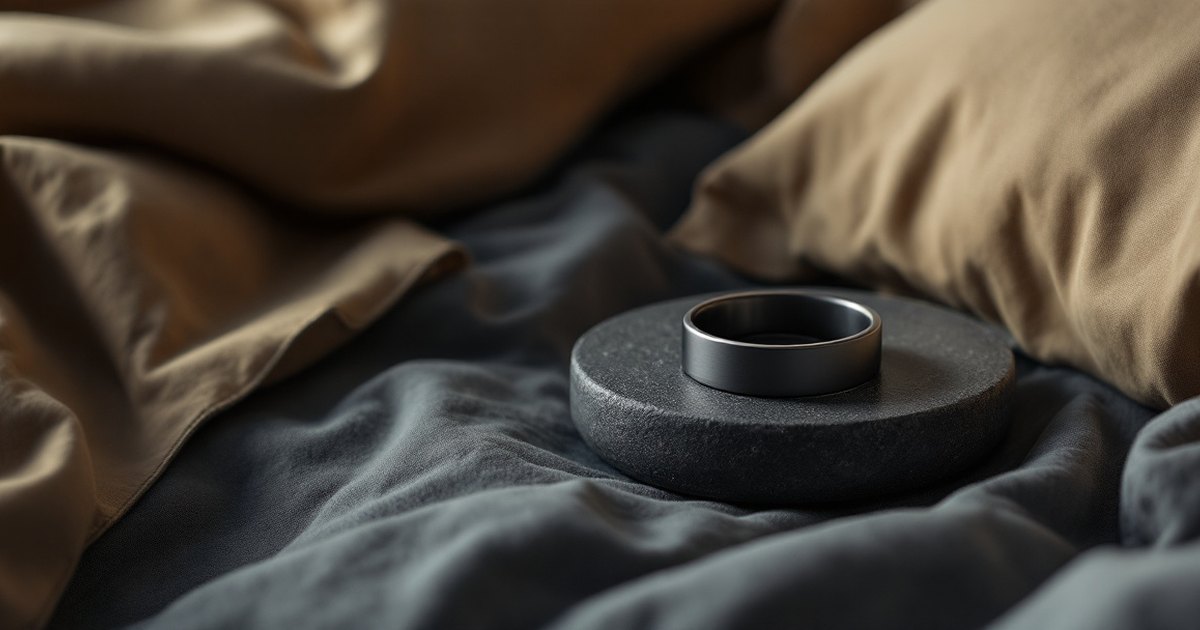
Verdict: For the user whose primary goal is optimizing sleep with minimal nightly friction, the smart ring is the definitive winner. Its form factor encourages all-night wear, and its sensors are tuned for the subtle physiological signals of sleep, providing a more holistic and comfortable tracking experience.
Why Your Choice of Sleep Tracker Matters
Not all sleep data is created equal. The quality and type of data you collect directly influence the insights you can gain. A device that inaccurately tags your light sleep as deep sleep, for instance, could lead you to draw incorrect conclusions about your recovery. The fundamental difference lies in the device’s purpose: is it a sleep-first tool or an activity-first tool with a sleep feature bolted on? This distinction impacts everything from sensor placement and battery life to the very algorithms used to generate your sleep score.

Sleep tracking accuracy is not a single metric; it’s a composite of how well a device measures heart rate, heart rate variability, body temperature, and movement. For sleep staging (determining light, deep, and REM sleep), consumer-grade devices are compared against the gold standard of polysomnography (PSG) conducted in sleep labs. Studies, such as a 2020 review in the journal Sleep Medicine Reviews, have shown that while no consumer device is as accurate as a PSG, some consistently outperform others. Devices worn on the finger or wrist have inherent limitations, but those designed specifically for sleep, like the Oura Ring 4, often use more sophisticated algorithms validated against PSG data.
The goal is actionable data. For a hot sleeper, a reliable skin temperature trend is more valuable than a step count. For someone managing stress, a consistent HRV reading is critical. Your choice of device dictates which of these data streams you get and their reliability. Investing in the right tool from the start prevents the frustration of inconsistent data and allows you to focus on the behaviors that actually improve your sleep.
The Smart Ring Advantage: Unobtrusive, Sleep-First Design
24/7 Wearability and Comfort
The single greatest advantage of a smart ring is its ability to disappear on your finger. Weighing between 3 to 6 grams, devices like the Ultrahuman Ring Air or the RingConn Smart Ring are light enough that you’ll rarely notice them, whether you’re typing, working out, or tossing and turning in bed. This seamless comfort is crucial for sleep tracking compliance; a device you don’t want to wear is a device that can’t collect data. Unlike a smartwatch, there’s no bulky face to dig into your wrist or your partner’s back during the night.
This continuous wear is not just about comfort; it’s about data completeness. Because you wear the ring all day and night, it builds a comprehensive baseline of your body’s rhythms. It captures your daytime resting heart rate, your body temperature fluctuations throughout a 24-hour cycle, and your HRV during moments of calm. This rich dataset allows the algorithms to understand what is normal for you, making the nighttime deviations—like a elevated temperature from a fever or a suppressed HRV from stress—more meaningful and accurate.
Dedicated Sleep Sensing Technology
Smart rings are engineered with a laser focus on the biomarkers most relevant to recovery and sleep. The most critical of these is peripheral body temperature. Rings like the Oura Ring 4 and the RingConn model contain a negative temperature coefficient (NTC) sensor that measures skin temperature from the finger’s vasculature with high precision. This is a key differentiator, as many smartwatches lack dedicated skin temperature sensors or use them primarily for menstrual cycle tracking rather than nightly core temperature trends.
Furthermore, the placement of sensors on the finger is advantageous for photoplethysmography (PPG), the technology used to measure heart rate and HRV. The vasculature in the finger is dense and closer to the surface than on the wrist, which can lead to more stable readings, especially during periods of low movement like sleep. A 2021 study in the Journal of Clinical Sleep Medicine validating the Oura Ring Gen3 found it had a 96% agreement with PSG for measuring total sleep time and a 90% agreement for measuring wake-after-sleep-onset, showcasing the potential accuracy of the ring form factor. For a deeper dive into the current market leader, read our Oura Ring 4 Review: Still the Sleep Tracking Benchmark?.
Superior Battery Life
Smart rings are power-efficient by design. With smaller screens (or no screen at all) and sensors optimized for low-energy operation, they can last significantly longer on a single charge. The Oura Ring 4 boasts a battery life of up to 7 days, while the RingConn and Ultrahuman models typically last 5-6 days. This extended battery life eliminates the daily charging ritual required by most smartwatches.
This is a critical feature for sleep tracking. You never have to worry about taking the ring off for a charge right before bed, ensuring you capture data every single night. The charging routine becomes a brief, weekly interruption rather than a daily hassle that can easily be forgotten, leading to gaps in your sleep history. Consistent data is the foundation of spotting long-term trends, and the ring’s battery life directly supports that consistency.
The Smartwatch Perspective: A Jack-of-All-Trades on Your Wrist
Comprehensive Daytime Activity and Notifications
If your wearable needs extend far beyond sleep, a smartwatch makes a compelling case. Devices like the Apple Watch Series 10 and the Garmin Venu 3 are powerful mini-computers. They track a vast array of workouts with GPS, provide detailed cardio fitness (VO2 Max) estimates, deliver smartphone notifications, and can even make phone calls. For the fitness enthusiast who wants a single device to manage everything from a morning run to an evening yoga session, a smartwatch is an all-in-one solution.
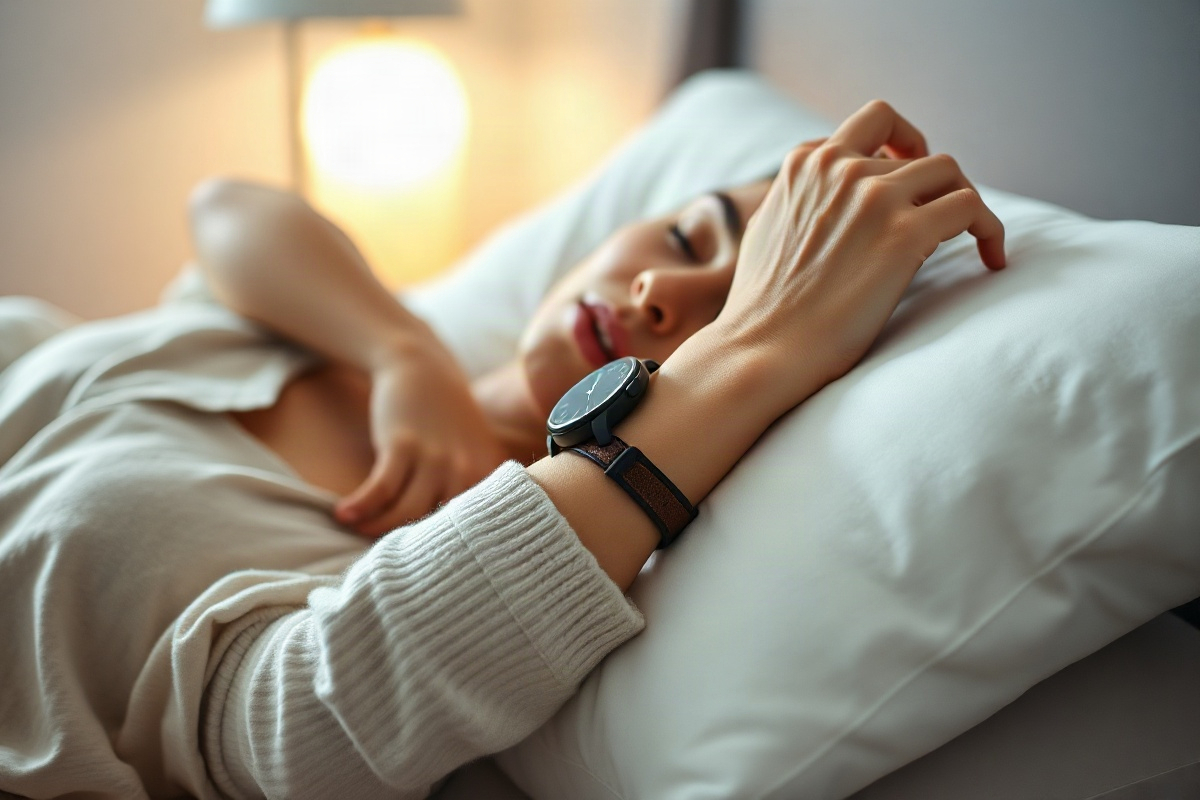
This integration extends to health monitoring. The Apple Watch, for example, offers FDA-cleared ECG functionality and blood oxygen monitoring. Garmin watches provide advanced metrics like training load and recovery time. For users with specific health concerns or athletic goals, these features can be invaluable. However, it’s important to remember that these are broad-spectrum health devices; their sleep tracking, while constantly improving, is often not as nuanced as a dedicated ring’s.
Potential Sleep Discomfort and Inconsistency
The primary drawback of a smartwatch for sleep is its physical presence. Even the slimmest models are substantial on the wrist. For many people, especially those who move around in their sleep or have sensitivity, a watch can be distracting, uncomfortable, or even painful if it presses against the wrist bone. This can lead to the device being removed, resulting in a night of lost data.
Furthermore, the act of taking a watch off and putting it on is more deliberate than with a ring. You might take your watch off to shower, to charge during the day, or simply because it’s bothering you at your desk. Each time you do this, you break the continuous data stream that provides context for your sleep metrics. This intermittent wear can make it harder for the algorithms to establish a reliable baseline for your daytime physiology, potentially reducing the accuracy of nighttime interpretations.
Battery Life: The Daily Charging Conundrum
With the exception of hybrids like the Garmin Venu 3 which can last up to 10 days in smartwatch mode (but less with GPS use), most flagship smartwatches require daily charging. The Apple Watch Series 10 typically needs to be charged every 18-24 hours. This creates a logistical problem for sleep tracking: when do you charge it? If you charge it overnight, you miss sleep data. If you charge it in the morning or evening, you risk it dying before the next charging opportunity.
This daily overhead is the antithesis of the “set it and forget it” philosophy ideal for sleep monitoring. It introduces a point of failure—forget to charge it one afternoon, and you’ve lost that night’s data. The smart ring’s multi-day battery life elegantly sidesteps this issue, making data collection a passive, background process rather than an active daily management task.
Head-to-Head: Accuracy in Key Sleep Metrics
When evaluating a sleep tracker ring review, the discussion always centers on fitness tracker ring accuracy. How do these two form factors actually compare on the data that matters? The key metrics are sleep stages (light, deep, REM), heart rate/HRV, and body temperature. Independent validation studies provide the best insight, as manufacturer claims can be overly optimistic.
For sleep staging, a 2022 study comparing the Oura Ring to PSG found it performed well on total sleep time and sleep efficiency but, like all consumer devices, showed more variability in distinguishing between specific sleep stages, particularly light and REM sleep. Smartwatches using newer algorithms, like the Fitbit Charge 6, show similar patterns. The current consensus is that no consumer device is perfectly accurate for sleep staging, but rings and higher-end watches are generally reliable for tracking the macro trends of sleep duration and consistency over time.
Where rings often pull ahead is in the consistency of HRV and temperature data. Because the ring is worn continuously and the finger provides a strong PPG signal, the HRV readings can be more stable. Body temperature trends are a unique strength of rings. A smartwatch like the Apple Watch measures wrist temperature, but this is more susceptible to environmental changes (e.g., pulling a blanket over your wrist). The finger-based measurement of a ring may provide a more stable proxy for core temperature trends, which is invaluable for spotting illness or hormonal changes. For a detailed comparison of two top rings, see our analysis: Ultrahuman Ring Air vs Oura Ring 4: Which Tracks Sleep Better?.
Making the Decision: Which User Are You?
Your lifestyle and primary goals should dictate your choice. There is no universally “better” device; there is only the better device for you. To simplify the decision, consider which of the following profiles best describes your situation.
Choose a Smart Ring If: You are primarily focused on optimizing your sleep and recovery. You want the most comfortable device to wear 24/7 without thinking about it. You value detailed body temperature and HRV trends over smartphone notifications on your wrist. You are a hot sleeper who needs to monitor temperature fluctuations, or a data-driven individual who wants a holistic view of your body’s stress and recovery cycles. You want to avoid monthly subscription fees, making a model like the RingConn Gen 2 an attractive option.
Choose a Smartwatch If: Sleep tracking is important, but it’s one of many features you need. You are an avid athlete who requires detailed GPS workout tracking, VO2 Max estimates, and structured training plans. You rely heavily on smart notifications, contactless payments, and other smartphone-integrated features directly from your wrist. You don’t mind the daily charging routine and find a watch comfortable to sleep in. Your ecosystem (Apple or Android) heavily influences your decision, as with the Samsung Galaxy Ring ecosystem. Speaking of which, you can explore our Samsung Galaxy Ring Sleep Tracking Review for an ecosystem-specific look.
Comparison Table: Smart Ring vs. Smartwatch
| Product | Best For | Key Sleep Spec | Price Range |
|---|---|---|---|
| Oura Ring 4 | The holistic sleep/recovery enthusiast wanting the most validated data. | Clinical-grade temperature sensor, 7-day battery, Sleep Score. | $450 – $550 |
| Ultrahuman Ring Air | Metabolic health focus, no subscription, sleek design. | Skin temperature, HRV, work-out linked recovery metrics. | $350 – $400 |
| Apple Watch Series 10 | iPhone users wanting a full-featured smartwatch with good sleep tracking. | Wrist temperature, blood oxygen, sleep stages via WatchOS. | $400 – $800+ |
| Garmin Venu 3 | Athletes seeking advanced daytime metrics and good battery life. | Sleep Score, HRV Status, nap detection, up to 10-day battery. | $450 – $500 |
| RingConn Gen 2 | Budget-conscious users seeking subscription-free, accurate tracking. | Skin temperature, SpO2, 5-6 day battery, one-time price. | $280 – $320 |
Key takeaways
- Smart rings excel in comfort and sleep-specific data, offering superior 24/7 wearability, dedicated temperature sensing, and multi-day battery life, making them the best choice for sleep-first users.
- Smartwatches are ideal for all-in-one functionality, providing robust daytime activity tracking, smart notifications, and GPS, but their bulk and daily charging can compromise sleep tracking consistency.
- Accuracy is comparable on macro sleep trends (like total sleep time), but rings may have an edge in the consistency of HRV and body temperature data due to their continuous wear and optimal sensor placement.
- Your decision hinges on primary use case: choose a ring for uncompromising sleep and recovery insight; choose a watch if sleep is a secondary feature to comprehensive daytime fitness and connectivity.
Frequently asked questions
Can a smart ring accurately detect sleep apnea?
No consumer smart ring is cleared to diagnose sleep apnea. While some rings, like the Oura Ring, can detect patterns of blood oxygen desaturation and elevated nighttime heart rate that may be associated with sleep-disordered breathing, these are screening tools, not diagnostic devices. If you suspect sleep apnea, you must consult a sleep physician for a proper polysomnography test.
Is it safe to wear a smart ring with a magnetic charging dock every night?
Yes, the low-level electromagnetic fields generated by these charging docks are considered safe for regular use. The rings are designed to be worn continuously, and the charging process itself only occurs for a short period weekly when the ring is not on your finger. There is no evidence to suggest any health risk from wearing a charged smart ring during sleep.
How does the new Samsung Galaxy Ring compare to an Oura Ring?
The Samsung Galaxy Ring is a strong new contender that integrates deeply with the Samsung Health ecosystem. Early reports and spec sheets suggest it focuses on energy score and holistic wellness metrics, competing directly with Oura. A key differentiator is ecosystem: Galaxy Ring is ideal for Samsung phone users, while Oura is platform-agnostic. For a full breakdown of the top contenders, see our guide to the Best Smart Rings for Sleep Tracking in 2026.
Do I need to pay a monthly subscription for a smart ring?
It depends on the brand. The Oura Ring requires a monthly subscription to access the full depth of your historical data and personalized insights. However, brands like Ultrahuman, RingConn, and Circular operate on a one-time purchase model with no ongoing fees, making them attractive for budget-conscious buyers. Always check the subscription model before purchasing.
To explore the full range of options and find the perfect device for your sleep journey, dive into our comprehensive Smart Rings category for in-depth reviews and comparisons.
Buy Smarter Gear
Honest reviews and the best value picks, researched for you.