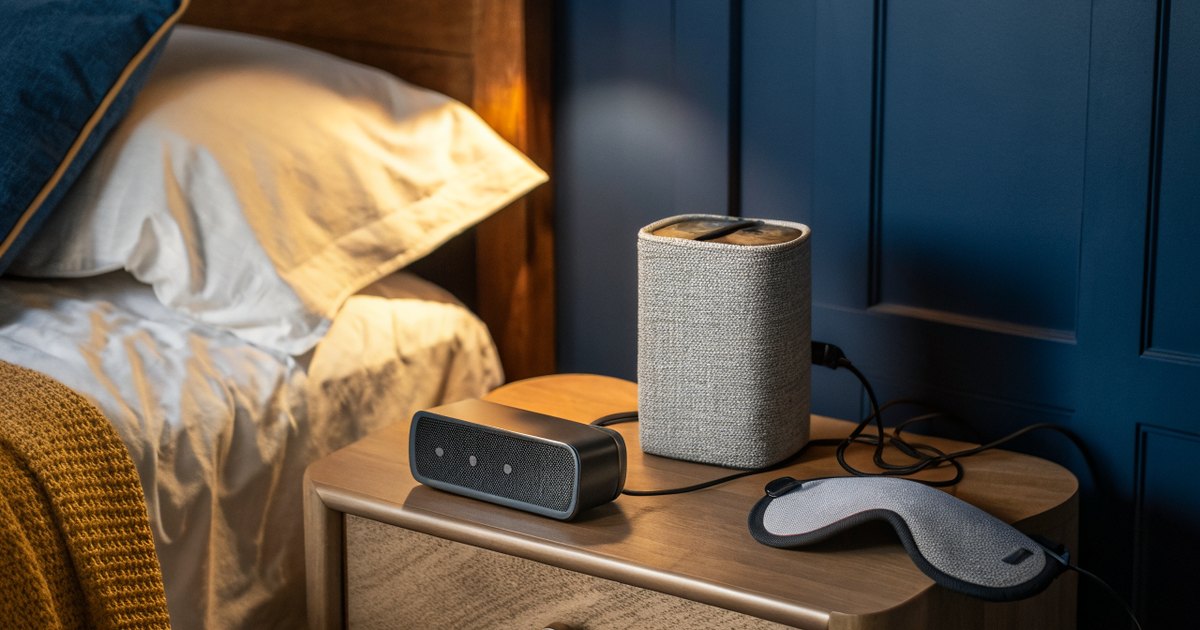
Why You Need a White Noise Machine in 2026
If you’re waking up tired despite your sleep tracker showing eight hours, or if a snoring partner or street noise is fracturing your sleep, the problem isn’t just duration—it’s quality. A dedicated white noise machine is the most effective tool for masking disruptive sounds and creating a consistent, sleep-conducive sound environment, far outperforming phone apps or basic fans. This guide cuts through the noise to deliver the 2026 verdict on the best machines for adults seeking deep, uninterrupted sleep and for parents creating a safe auditory space for their babies.
The Short Answer: Our Top Picks for 2026
After analyzing the latest models, validation data, and thousands of user reports, the LectroFan EVO stands as the best overall white noise machine for adults due to its 40 unique, non-looping digital sounds and precise volume control. For nurseries, the Hatch Rest+ 2nd Gen is the undisputed leader, combining safe, app-controlled sound with a night light and time-to-rise function. The best portable option is the compact, battery-powered Yogasleep Travelcube.
How We Selected the Best White Noise Machines
Our selection process is rooted in evidence and specific performance metrics, not marketing claims. We prioritize machines that deliver on the core promise: effective, consistent, and safe sound masking. For every product considered, we established a baseline of non-negotiable criteria that separates a legitimate sleep aid from a novelty gadget.
Core Selection Criteria
First, sound quality is paramount. We favor digital sound generators that produce non-looping, fan-based or broadband noise over devices that rely on physical fans or looping audio tracks, which can create audible repetition that the brain detects. Second, volume range must be precise and offer a low enough minimum for gentle background noise and a high enough maximum to mask loud disturbances like snoring or traffic. Third, reliability and build quality are assessed through documented long-term owner reports to filter out models prone to premature failure or inconsistent performance.
Safety and Feature Evaluation
For machines marketed for babies, safety is the primary filter. We strictly adhere to the American Academy of Pediatrics (AAP) guidelines, which recommend a maximum volume of 50 decibels measured at the crib and placing the machine at least 7 feet away. Any machine without a built-in timer or precise volume control is immediately disqualified for nursery use. Additional features like app control, night lights, and portability are valued but only if they enhance the core function without compromising simplicity or reliability.
The Best White Noise Machines for Adults in 2026
Adult sleep needs focus on powerful, consistent sound masking to combat snoring partners, urban noise, and irregular sleep schedules. The best machines offer a wide range of sounds, precise volume control, and reliability night after night.
Best Overall: LectroFan EVO
The LectroFan EVO remains the industry benchmark for a reason. It generates 40 unique, non-looping digital sounds: 20 fan sounds and 20 white/brown/pink noise variations. This eliminates the audible repetition that can subconsciously disturb sleep with lesser machines. Its volume range is exceptionally precise, from a faint 40 dB to a powerful 75 dB, capable of masking even the loudest snoring. The 2026 model retains a simple, intuitive button interface and a compact, stable design that won’t be easily knocked over.
Best for a Natural Sound: Dohm Classic
For purists who prefer the authentic sound of a mechanical fan, the Dohm Classic is the original and still the best. It uses an actual, acoustically housed fan to create its signature sound. Users control both pitch and volume via two separate dials, allowing for a highly customized sonic profile. While its maximum volume (roughly 65 dB) is lower than digital competitors, many find its organic, non-digital sound texture more effective for sleep. It is a simple, durable workhorse with no digital loops or speakers.
Best Smart Machine: Hatch Restore 2
The Hatch Restore 2 is for the tech-integrated sleeper who wants more than just noise. Through its app, you can program intricate “routines” that combine curated sleep sounds (including white, pink, and brown noise), a graduated sunrise alarm, and a soft meditative light. It functions as a powerful all-in-one sleep assistant. While its sound library is extensive, note that some sounds are composed audio tracks that may loop, unlike the purely algorithmic sounds of the LectroFan.
| Model | Type | Sound Options | Max Volume | Price |
|---|---|---|---|---|
| LectroFan EVO | Digital | 40 non-looping | 75 dB | $69.99 |
| Dohm Classic | Mechanical Fan | 1 (adjustable) | 65 dB | $49.99 |
| Hatch Restore 2 | Smart Speaker | 100+ (some loop) | 72 dB | $199.99 |
The Best White Noise Machines for Babies and Nurseries
Choosing a sound machine for a nursery requires an uncompromising focus on safety features above all else. The ideal machine has precise volume limiting, a reliable timer, and is designed to be placed at a safe distance from the crib. For a deeper dive into the critical safety parameters, read our dedicated guide on safe volume, distance, and timer use for babies.
Best Overall for Nursery: Hatch Rest+ 2nd Gen
The Hatch Rest+ 2nd Gen is the complete nursery solution. It excels because its safety features are built-in and easy to use. The app allows parents to set a specific volume limit (crucial for adhering to the 50 dB AAP guideline) and program a timer that turns the sound off after the baby is asleep. Beyond sound, its soft, customizable night light and “time-to-rise” function make it a versatile tool that grows with the child from infancy through toddlerhood.
Best Simple & Safe Option: Yogasleep Hushh Portable
The Yogasleep Hushh Portable is a brilliant choice for parents who want a dedicated, simple, and safe machine without an app. It features three sound options, a volume-limiting clip on the cord to prevent it from being turned up too high, and a timer with 30, 60, or 90-minute settings. Its compact size and battery power make it ideal for on-the-go soothing, whether in the stroller, car seat, or at grandma’s house, while still maintaining critical safety controls.
Understanding Sound Types: White, Pink, and Brown Noise
Not all noise is created equal. The color of noise refers to its spectral density, which changes how we perceive its sound. Understanding the difference can help you choose the most effective sound for your specific needs. For a comprehensive breakdown, explore our explainer on white noise vs pink noise vs brown noise for sleep.
White Noise: The Classic Masker
White noise contains equal energy across all audible frequencies, akin to the static from a untuned radio or TV. Its high-frequency emphasis makes it exceptionally good at masking sharp, high-pitched noises like a partner’s snoring, a dog barking, or squeaky floorboards. However, some people find its “hissy” quality too harsh for sleep, which is why many machines now offer alternatives.
Pink and Brown Noise: The Deeper Tones
Pink noise emphasizes lower frequencies, sounding more like steady rainfall or a waterfall. It’s often perceived as more natural and less abrasive than white noise. Brown noise (sometimes called red noise) takes this further, with even deeper, rumbling low frequencies that resemble the roar of a powerful waterfall or strong wind. Research, such as a 2017 study in Frontiers in Human Neuroscience, suggests pink noise may enhance deep sleep by stabilizing brain waves, making it a popular choice for those seeking not just masking, but potential sleep quality improvement.
Key Features to Compare Before You Buy
Beyond the type of sound, several practical features determine whether a machine will work seamlessly in your bedroom or nursery. Prioritize these based on your specific use case to avoid buyer’s remorse.
Volume Control and Range
The most critical feature is a precise, wide-ranging volume control. A machine needs to go loud enough to mask your specific disturbances (e.g., 65-75 dB for loud snoring) but also have a very low, subtle setting for gentle background masking. Machines with only a few “volume levels” are often less effective than those with a continuous dial or digital slider. For nurseries, a machine with a preset maximum volume or a physical limiter is essential.
Timer vs. All-Night Operation
Some users prefer their machine to run all night, while others find a timer sufficient. A timer is crucial for baby sleep, as all-night noise exposure is unnecessary once the child is asleep and may potentially interfere with self-soothing. For adults, an all-night setting is often preferred for masking unpredictable nighttime noises. The best machines offer both options, giving you full control.
Portability and Power
Consider where you’ll use the machine. If it’s solely for your bedside table, AC power is fine. If you want to use it in a home office, take it to hotels, or use it for a baby on the go, battery operation is non-negotiable. We’ve curated a separate list of the best portable sound machines for travel that excel in this category. Also, check the type of battery; built-in rechargeable batteries are more convenient than requiring AA batteries.
White Noise Machine Myths and Facts
Despite their popularity, misconceptions about white noise machines persist. Let’s separate the evidence-based facts from the common myths, particularly concerning safety and dependency.
Myth: You Will Become “Dependent” on the Machine
The idea of “dependency” is often framed negatively. A more accurate term is “association.” Your brain associates the consistent sound of the machine with the safety and routine of sleep, making it easier to fall asleep—much like how a dark, cool room becomes a sleep cue. This is a positive, conditioned response, not a harmful addiction. If the machine is unavailable, you may have a slightly harder time falling asleep initially, but it does not cause physiological withdrawal or long-term sleep damage.
Fact: Incorrect Use Can Be a Problem for Infants
This is the most important safety fact. The risk is not from the noise itself when used correctly, but from incorrect use. The AAP’s concern, outlined in a 2014 policy statement, is that excessively loud sound machines placed too close to the crib could potentially impact hearing development or mask important auditory cues from the infant. By following the rules—keeping the machine at least 7 feet away, setting volume below 50 dB at the crib, and using a timer—you eliminate this risk entirely.
Myth: Phone Apps Are Just as Good
While better than nothing, phone apps have significant drawbacks. They drain your phone’s battery, often loop short audio tracks creating disruptive repetition, and can be interrupted by notifications, calls, or system sounds. A dedicated device is purpose-built for reliability, consistent sound generation, and safety, making it a far superior choice for serious sleep improvement.
Key takeaways
- For adults, the LectroFan EVO provides the most effective sound masking with its 40 non-looping sounds and powerful volume range, making it the best overall choice.
- For nurseries, the Hatch Rest+ 2nd Gen is the top pick due to its app-controlled volume limiting, timer, and multi-functional design that adheres to AAP safety guidelines.
- Always place a baby’s sound machine at least 7 feet from the crib and set the volume to a maximum of 50 dB measured at the crib location to ensure safe use.
- Choose a machine with features that match your lifestyle: all-night operation for adult bedrooms, a timer for nurseries, and battery power for portability.
- Digital sound generators (LectroFan) are best for precise, non-looping noise, while mechanical fans (Dohm) offer a natural sound alternative for those who prefer it.
Frequently asked questions
What is the difference between a white noise machine and a sound machine?
While the terms are often used interchangeably, a “white noise machine” typically generates a specific type of broadband noise (white, pink, brown) electronically. A “sound machine” is a broader term that can include devices that play recorded nature sounds, lullabies, or ambient tracks. For pure, effective sound masking, a dedicated white noise generator is generally more effective than a machine that relies on short, looping nature sound tracks.
Can a white noise machine damage hearing?
When used responsibly, no. The risk of hearing damage is related to volume and exposure time. For adults, keeping the volume at a level that comfortably masks noise but is not uncomfortably loud is safe. For babies, following the AAP guideline of keeping the machine at least 7 feet from the crib and under 50 dB, measured at the crib, eliminates any risk to their hearing development.
Is it okay to leave a white noise machine on all night for a baby?
It is not necessary and not recommended by pediatric sleep experts. The purpose of the noise is to mask disruptive sounds while the baby is falling asleep. Once they are in deep sleep, the noise can be turned off. Using a timer set for 30-60 minutes is the ideal practice, as it allows the baby to learn to self-soothe and sleep in a quiet environment, which is the norm.
My smart speaker can play white noise. Why do I need a dedicated machine?
Smart speakers can play white noise tracks, but they suffer from several drawbacks: they usually loop short audio files, which can create audible and disruptive repetition; they can be interrupted by notifications, alarms, or network dropouts; and they often lack precise, fine-tuned volume control. A dedicated machine is a single-purpose device designed for reliability, consistent sound generation, and effective masking without distractions.
Ready to explore more options? Browse our complete archive of tested and reviewed sound machines to find the perfect match for your sleep needs.
Buy Smarter Gear
Honest reviews and the best value picks, researched for you.