Disclosure: Some links in this guide are affiliate links, meaning we may earn a commission at no extra cost to you if you make a purchase. All opinions and recommendations remain our own.
You’re searching for a way to block out a snoring partner, street noise, or the brain chatter that keeps you awake, and you’ve landed in the world of colored noise. But with terms like white, pink, and brown noise being thrown around, how do you choose? This is the definitive guide that moves past marketing terms and into the acoustics, neuroscience, and real-world application of each sound type for sleep optimization.
Short Answer: There is no universal “best” color of noise for sleep; personal preference and your specific noise-masking goal determine the winner. White noise is best for masking sharp, high-frequency sounds like chatter or a dog’s bark. Pink noise is often perceived as more natural and balanced, with preliminary research suggesting it may improve sleep depth and memory. Brown noise is the deepest, most rumbling option, excellent for drowning out low-frequency disturbances like traffic, snoring, or an air conditioner. The most effective choice is the one you find most comfortable to listen to all night.
The Science of Sound: Frequency and Amplitude Explained
To understand why different “colors” of noise affect us differently, we need a quick primer on the physics of sound. All sound is a wave, defined by its frequency (measured in Hertz, Hz) and its amplitude (measured in decibels, dB). Frequency is the pitch—a high-pitched whistle has a high frequency, while a bass drum has a low frequency. The human hearing range is typically between 20 Hz and 20,000 Hz. Amplitude is the volume or intensity of the sound wave; a louder sound has higher amplitude.
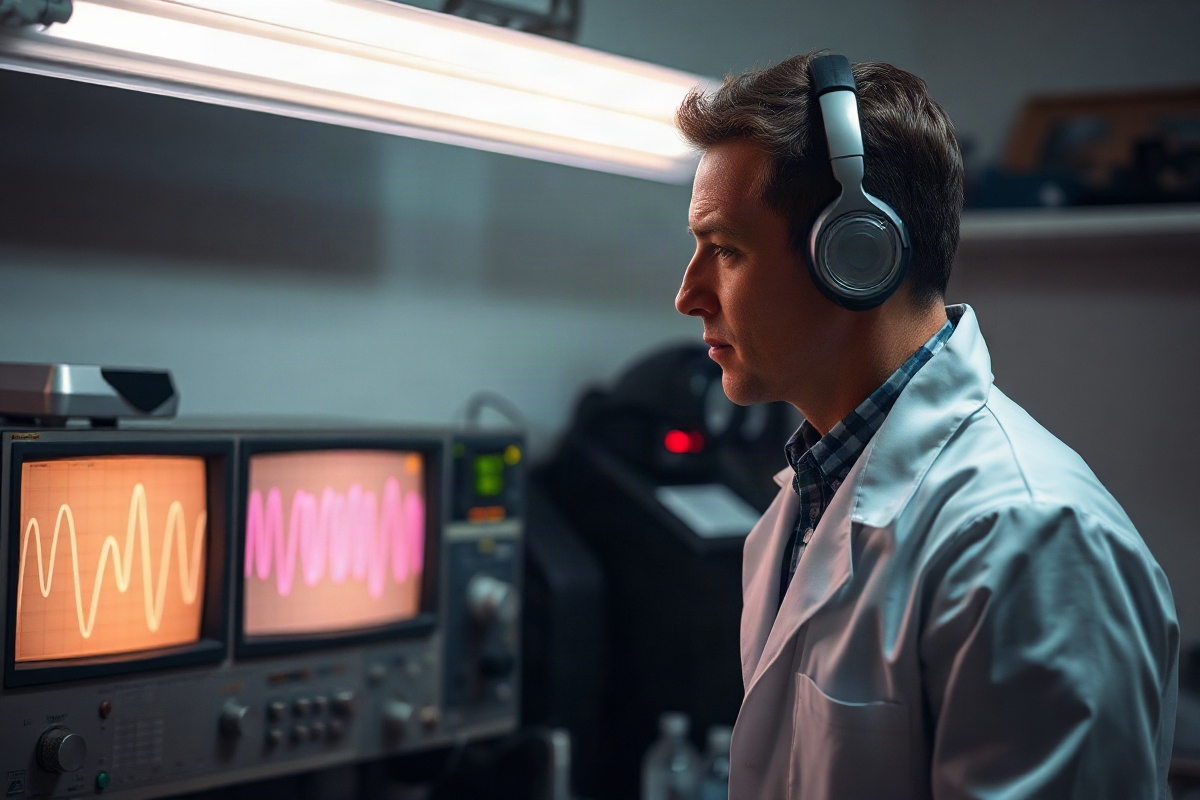
Natural and human-made sounds are not single frequencies but a complex mix of many frequencies at different amplitudes. A masking sound works by creating a consistent auditory blanket that reduces the contrast between background silence and disruptive noises. This makes sudden sounds, like a door slamming, less jarring and noticeable because they don’t stand out against the sonic backdrop. The “color” of the noise refers to the specific recipe of how much energy (amplitude) is present at each frequency across the spectrum.
How Masking Works for Sleep
When you introduce a continuous, predictable sound, you engage a neural process called auditory habituation. Your brain quickly learns the masking sound is irrelevant and begins to filter it out, allowing your nervous system to relax. Crucially, this same process also helps filter out the unpredictable, disruptive noises that would otherwise trigger an alert response. Think of it as acoustic camouflage: by filling the auditory field with a consistent texture, you make the “outline” of intrusive sounds harder for your brain to detect. This is why a sound machine can be more effective than earplugs, which often create an uncomfortable vacuum of silence where your own heartbeat or breathing becomes distracting.
White Noise: The Broad-Spectrum Masker
White noise is the original, most recognized sound for sleep. Acoustically, white noise contains equal energy across every frequency within the human hearing range. Imagine the static from an untuned analog TV or a radio tuned between stations—that’s classic white noise. Because it delivers equal power per frequency, it is particularly effective at masking higher-pitched sounds. A 2021 study in the journal Sleep Medicine reviewed the existing literature and concluded that white noise can improve sleep onset latency (the time it takes to fall asleep) by providing a consistent auditory environment, especially in noisy settings.
However, this equal-energy profile has a perceptual downside. To our ears, which are more sensitive to mid-to-high frequencies, white noise can often sound bright, hissy, or staticky. Some find this quality grating over long periods, comparing it to the sound of air escaping from a tire. For others, this very sharpness is what makes it effective for masking a partner’s high-frequency snoring, a neighbor’s conversation, or the ping of smartphone notifications from another room. Its strength is its broad-spectrum coverage.
When choosing a white noise machine, a critical feature is whether the sound loops. Many basic machines play a short, recorded clip that repeats every 30-60 seconds. Over time, your brain can detect this subtle loop point, which can become a distraction itself. Modern digital machines like the LectroFan Evo generate non-looping, algorithmically created white noise, which provides a truly seamless and consistent soundscape. For a deep dive into this important technology, see our LectroFan Evo Review: The No-Loop White Noise Machine.
Pink Noise: The Balanced, Natural Choice
Pink noise is often described as a more balanced, flat, or even “natural” sounding alternative to white noise. The technical difference is that pink noise has equal energy per octave. This means that as the frequency doubles (going up an octave), the power decreases by half (3 dB per octave). The result is a sound that feels deeper and less harsh than white noise, with the high-frequency hiss significantly rolled off. Common real-world examples of pink noise include steady rainfall, wind rustling through leaves, or a waterfall in the distance.
Emerging research has sparked significant interest in pink noise’s potential benefits for sleep architecture—the structure of your sleep cycles. A 2017 study in Frontiers in Human Neuroscience found that playing pink noise in sync with the slow-wave (deep sleep) brain waves of older adults increased the duration of that deep sleep phase and improved their scores on a memory recall test the following morning. The theory is that the gentle, rhythmic quality of pink noise may help stabilize and enhance the brain’s natural slow-wave oscillations. It’s important to note that this research is promising but still preliminary, and the effects likely vary from person to person.
For the listener, the primary advantage of pink noise is its comfort. Its smoother, more balanced profile is less likely to be perceived as annoying over an entire night. It excels at masking a general, mid-range hum of environmental noise without drawing attention to itself. Many premium sound machines, including the popular Hatch Rest+ 2nd Gen, include high-quality pink noise options alongside white noise and nature sounds. You can explore its full nursery-friendly feature set in our Hatch Rest+ 2nd Gen Review for Nurseries.
Brown Noise (aka Red Noise): The Deep Rumble
Brown noise, sometimes called red noise or Brownian noise, takes the frequency slope of pink noise and steepens it further. It has even more energy concentrated in the lower frequencies, with power decreasing by 6 dB per octave. This creates a deep, rumbling, thunderous sound reminiscent of a heavy waterfall, distant thunderstorm, or the low roar of a jet engine from inside the cabin. It is named not for the color but after Robert Brown, the botanist who discovered Brownian motion.
This profound emphasis on bass frequencies makes brown noise a powerful tool for a specific set of problems. It is exceptionally effective at masking low-frequency disturbances that white noise often struggles to cover. If your main sleep disruptors are a partner’s rumbling snore, the low hum of urban traffic, an air conditioning unit, or a neighbor’s bass-heavy music, brown noise can provide a dense, low-frequency blanket that absorbs these intrusions. For some people with tinnitus (ringing in the ears) or a racing mind, the visceral, physical sensation of the rumble can also be more grounding and focusing than higher-pitched sounds.
The potential drawback of brown noise is its intensity. For some, the deep rumble can feel overwhelming or even cause a slight vibration in the room depending on the speaker. It is less effective at masking higher-pitched sounds like a baby’s cry or a teakettle whistle. You’ll want a sound machine with a speaker capable of reproducing these lower frequencies without distortion. Not all small, portable machines handle brown noise well; you may need a device with a larger driver or a dedicated subwoofer channel for the full effect.
Head-to-Head Comparison: When to Use Each
Choosing between white, pink, and brown noise is less about which is objectively “better” and more about matching the sound profile to your specific auditory environment and personal sensitivity. The following table provides a quick-reference guide for the primary use cases of each noise color.

| Noise Color | Sound Profile | Best For Masking | Potential Drawback |
|---|---|---|---|
| White Noise | Hissy, static-like (e.g., untuned TV). | High-frequency sounds: chatter, barking, phone pings, some snoring. | Can sound too sharp or grating for some over long periods. |
| Pink Noise | Balanced, flat (e.g., steady rainfall). | General ambient noise; may promote deeper sleep based on early research. | May not be bassy enough for very low-frequency disturbances. |
| Brown Noise | Deep, rumbling (e.g., waterfall, thunder). | Low-frequency sounds: traffic rumble, deep snoring, HVAC hum. | Can be overwhelming; requires a speaker with good bass response. |
Beyond masking, consider your personal auditory sensitivity. If you are easily irritated by high-pitched sounds, white noise may be counterproductive. Start with pink noise as a neutral baseline. If your mind races with anxiety, the physical, grounding rumble of brown noise might be more effective at capturing your focus. The only way to know for sure is to test them. Use a high-quality app or sound machine that offers all three variants and listen for at least 15-20 minutes in a dark room while trying to relax. The right sound will feel like it’s “filling the space” of your room without demanding your attention.
Practical Application: Choosing and Using a Sound Machine
Understanding the theory is one thing; implementing it effectively is another. The device you use to play these sounds is as important as the sound itself. Dedicated sound machines are generally superior to smartphones for sleep for two key reasons: they don’t emit sleep-disrupting blue light, and they are designed to play continuously all night without notifications or calls interrupting. When browsing our comprehensive list of the Best White Noise Machines for Adults and Babies, look for models that specify non-looping sound generation and offer a variety of noise colors.
Volume is the most critical safety and effectiveness setting. The goal is masking, not drowning. For adults, a volume just loud enough to make disruptive noises fade into the background is ideal—typically around 50-60 dB, measured from the pillow. For babies, adherence to American Academy of Pediatrics (AAP) guidelines is non-negotiable: the machine should be placed at least 7 feet from the crib, set at a volume no louder than 50 dB at the crib mattress, and used with a timer to turn off after the child falls asleep. Our dedicated guide, Best White Noise Machines for Babies: Safe Volume, Distance and Timer Guide, covers these protocols in detail.
For travelers, consistency is key to sleeping well in unfamiliar hotels or noisy environments. A compact, portable sound machine that can replicate your home sleep soundscape is a powerful tool. Look for devices with a rechargeable battery, durable construction, and the specific noise color you prefer. We’ve tested and vetted several top options in our Best Portable Sound Machines for Travel roundup.
Key Takeaways
- Choose white noise if you need to mask sharp, high-pitched sounds like talking or a dog barking. Its full-spectrum hiss is powerful but can be grating to some.
- Choose pink noise for a more balanced, natural sound (like rain) that may support deeper sleep. It’s an excellent all-purpose starting point for most people.
- Choose brown noise to combat low-frequency disturbances like traffic, snoring, or HVAC rumble. Its deep, thunderous profile is highly effective for these issues but requires a good speaker.
- Always prioritize safe volume levels, especially for children, following the AAP guideline of 50 dB max at the crib, with the machine placed over 7 feet away.
- The ultimate test is personal preference. The “best” noise color is the one you find most comfortable and effective for masking your unique sleep environment.
Frequently Asked Questions
Is it bad to sleep with white noise every night?
For most adults, there is no evidence that nightly use of white noise or other colored noise is harmful, provided the volume is kept at a reasonable level (typically under 70 dB). The brain effectively habituates to the consistent sound. The primary concern is for infants, where excessive volume or close proximity could potentially impact hearing development, which is why strict adherence to the 50 dB/7-feet rule is essential.
Can pink noise really improve deep sleep?
Preliminary studies, such as the 2017 research in Frontiers in Human Neuroscience, show a promising correlation between pink noise played in sync with brain waves and increased slow-wave sleep and memory consolidation. However, this research is still in early stages and the effect isn’t guaranteed for everyone. Anecdotally, many users report a more restful feeling with pink noise, but it should not be considered a medical treatment for sleep disorders.
What’s the difference between brown noise and just turning on a fan?
A fan produces a complex mix of sounds, including motor hum and air movement, which often has a frequency profile closest to pink or light brown noise. However, it is less consistent and the sound changes with fan speed and cleanliness. A dedicated brown noise track is a purer, more consistent, and often deeper rumble that can be finely tuned for volume and bass response, providing more reliable and potentially more effective low-frequency masking.
I have tinnitus. Which noise color is best?
This is highly individual and requires experimentation. Many tinnitus sufferers find relief with masking sounds. White noise can mask the high-pitched ringing common in tinnitus. Brown noise can be grounding for lower-frequency tinnitus or a “roaring” type. Pink noise is often a comfortable middle ground. The goal is to find a sound that blends with or sits just below your tinnitus tone, making it less noticeable without being irritating. Always consult an audiologist for personalized advice.
Ready to find the perfect machine to generate your ideal sleep sound? Explore our full library of in-depth reviews and buying guides in the Sound Machines category to make a confident, evidence-based purchase.
Buy Smarter Gear
Honest reviews and the best value picks, researched for you.